



published: June 2026
Quick Answer
❓ What’s the best 7-day Egypt itinerary?
A well-planned 7-day Egypt trip covers Cairo, a Nile cruise or flights to Aswan and Luxor, and optionally the Red Sea — hitting the Pyramids, Abu Simbel, Karnak, and the Valley of the Kings. Mid-range travelers should budget around $1,300 per person for the week.
🐫 Route
Cairo (Days 1–2) → fly to Aswan for the Nile cruise (Days 3–5) → Luxor (Day 6) → depart or extend to Hurghada (Day 7)
✈️ Cruise vs. flights
A full Nile cruise needs 3–4 nights, so many 7-day trips skip it and fly between cities to fit in more sightseeing
💰 Budget
From $700 pp (budget) to $1,300 pp (mid-range) to $4,000+ pp (luxury), plus a $25 visa-on-arrival fee
🌤️ Best time
October–April for comfortable weather; book cruises 3+ months ahead for December–January
A well-planned Egypt Itinerary 7 Days covers the Pyramids of Giza, a Nile cruise from Aswan to Luxor, the Valley of the Kings, and even time on the Red Sea — all within a single week. Seven days is the minimum that lets you experience Egypt’s three great regions — Cairo, Upper Egypt, and the coast — without feeling like you spent the whole trip in airports. Many travelers choose Egypt Travel Packages to simplify logistics and make the most of their time. This guide breaks the week down day by day, gives you a realistic cost estimate, and tells you exactly what to bring home from the markets. Whether you’re booking a guided tour or planning independently, use this Egypt Itinerary 7 Days as your blueprint
The Best 7 Day Egypt Itinerary: Overview of the Route
The classic 7 day Egypt tour itinerary follows a south-to-north logic: fly into Cairo, then immediately head south to Aswan to begin a Nile cruise, work your way north to Luxor, and return to Cairo for your final day. This structure keeps travel time efficient — you’re not doubling back across the country — and it mirrors the natural flow of the Nile.
Here’s the structure at a glance:
- Day 1: Arrive Cairo — transfer, rest, optional Sound and Light Show at the Pyramids.
- Day 2: Giza Plateau, Grand Egyptian Museum.
- Day 3: Fly from Cairo to Aswan — board the Nile cruise, Philae Temple.
- Day 4: Abu Simbel (optional early start), Kom Ombo Temple, sail north.
- Day 5: Edfu Temple, continue to Luxor — Valley of the Kings, Hatshepsut Temple.
- Day 6: Karnak Temple, Luxor Temple — evening flight back to Cairo.
- Day 7: Departure, or optional extension to Hurghada for the Red Sea.
Domestic flights between Cairo and Aswan take roughly 1.5 hours. The overnight Nile cruise covers the Aswan–Luxor stretch over three nights, the standard package on most 4-night cruises. This is the same core route used by most 7 days Egypt tour packages, and it’s been refined over decades of travel logistics — it works.
Day 1–2: Cairo and the Giza Pyramids
Cairo rewards a slow start. On your first evening, check into your hotel — ideally near the Giza Plateau so you can see the Pyramids illuminated from your rooftop — and let yourself adjust to the city’s rhythm. If you arrive before sunset, a brief walk through Islamic Cairo or a tea at a local café near Khan el-Khalili sets the mood without draining your energy.
Day 2 is the full Giza experience. Arrive at the Giza Plateau by 7:30 AM to beat both the heat and the tour buses. Allow three to four hours for the complex: the three main pyramids, the Great Sphinx, and the Valley Temple of Khafre. In the afternoon, drive 30 minutes south to Saqqara to see the Step Pyramid of Djoser — the oldest freestanding stone structure in the world, predating Giza by a century.
Cap the day at the Grand Egyptian Museum (GEM), which opened fully in late 2025 and sits adjacent to the Giza complex. The GEM houses the complete Tutankhamun collection — over 5,000 artifacts — as well as the Royal Mummies Hall. Budget two to three hours. This is one of the most significant museum openings of the decade, and your 7-day Egypt tour itinerary should treat it as a centerpiece rather than an afterthought.
💡 Nada’s Tip, Egypt Travel Specialist: Most visitors rush through the Grand Egyptian Museum in two hours and leave exhausted. My advice: do Saqqara in the afternoon first, then dedicate your full morning on Day 2 to the GEM before the Pyramids. The light inside the Tutankhamun galleries is better in the morning, and you’ll have genuine energy for it — not the end-of-day fatigue most people arrive with.
Before you leave Cairo, Khan el-Khalili bazaar in Islamic Cairo is worth an evening visit for atmosphere and a first round of shopping. We’ll come back to what to buy — and where — in the shopping section below.
For private guided access to the Giza Plateau, the Sphinx enclosure, and the Egyptian Museum with skip-the-line entry, explore our Cairo tours — all led by certified Egyptologists.
Day 3–5: Nile Cruise from Aswan to Luxor
The Nile cruise portion of your Egypt itinerary 7 days is the section most travelers remember longest. Take an early-morning domestic flight from Cairo to Aswan (roughly 1.5 hours), board your cruise ship for a late lunch on the water, and spend the afternoon at Philae Temple — an island sanctuary dedicated to the goddess Isis, relocated stone by stone from its original site before the Aswan High Dam flooded the area in the 1970s. Go at golden hour if possible; the light on the sandstone columns is extraordinary.
Day 4 — Abu Simbel and Kom Ombo
An optional but strongly recommended early departure (around 4 AM) gets you to Abu Simbel before the heat rises and the coach groups arrive. The twin temples of Ramesses II and Nefertari were carved directly into a cliff face around 1264 BCE and relocated in a UNESCO-backed operation in the 1960s. The scale is difficult to comprehend until you’re standing in front of the four seated colossi — each over 20 meters tall. Return to the cruise ship for lunch, then sail north past golden desert cliffs to Kom Ombo, a double temple shared between the crocodile god Sobek and falcon-headed Horus.
💡 Expert Tip from Nada, Egypt Travel Specialist: Abu Simbel is worth the 4 AM departure — but only if you go independently or with a small private group. The large convoy buses all arrive within the same 30-minute window, which means 500 people are crowding the forecourt simultaneously. Book a private transfer and leave 20 minutes ahead of the convoy. You’ll have the temples almost to yourself for the first hour.
Day 5 — Edfu to Luxor
Sunrise reveals the Temple of Horus at Edfu, the best-preserved ancient temple in Egypt. The outer pylons, carved with battle reliefs, stand over 36 meters high. Continue north to Luxor, where the West Bank opens into one of archaeology’s richest landscapes. The Valley of the Kings holds over 60 royal tombs; your standard ticket covers three, with the tomb of Tutankhamun and Seti I available for an additional fee. The mortuary temple of Hatshepsut at Deir el-Bahari, carved into the limestone cliffs at three ascending terraces, is one of the most visually striking structures in Egypt.
Our Luxor tours include a private Egyptologist guide for the Valley of the Kings, Karnak, and Luxor Temple — with options for hot air balloon rides at dawn.
Day 6: Karnak and Luxor Temple
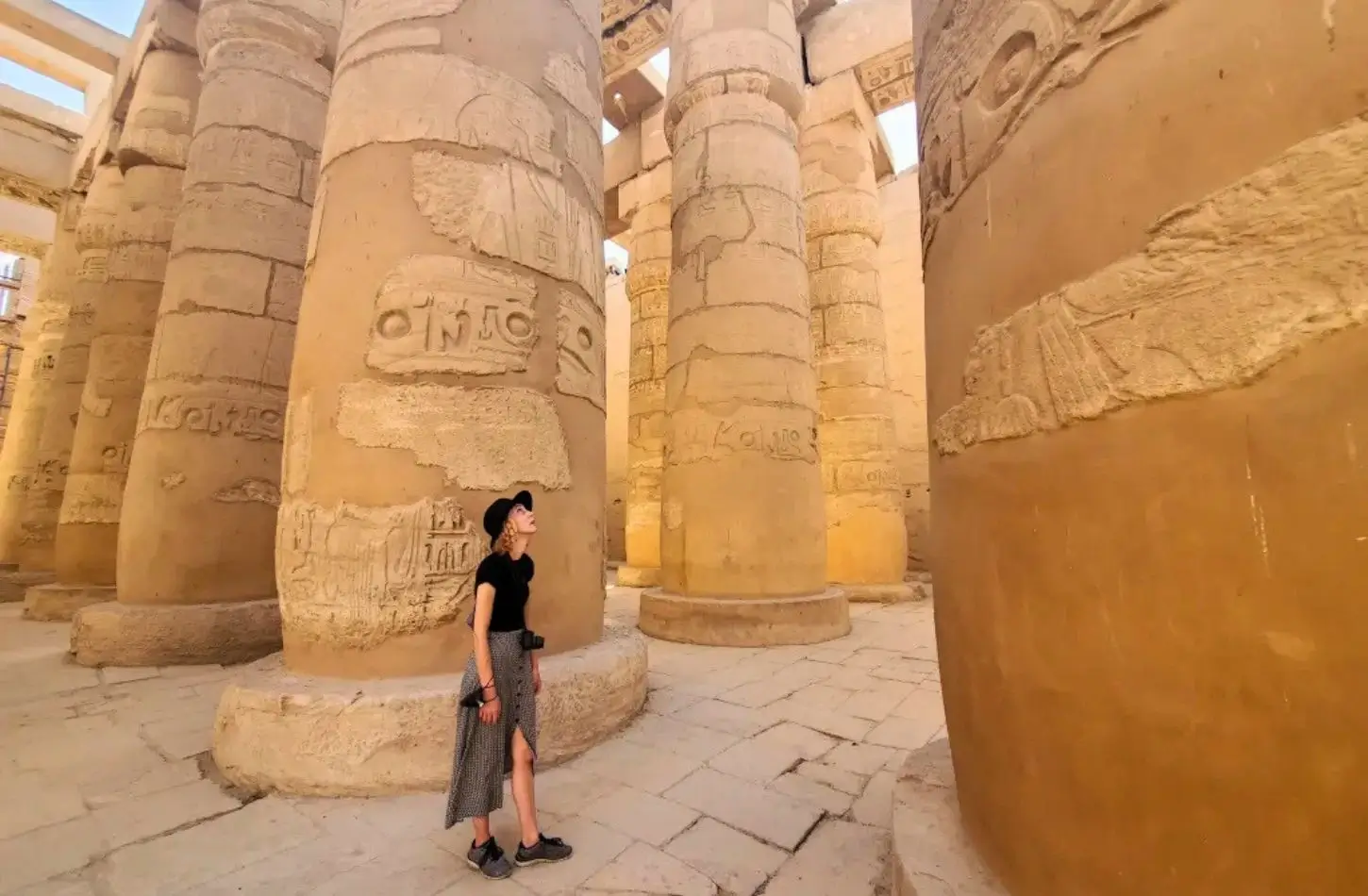
Luxor’s East Bank is your focus on Day 6, and it demands an early start. Karnak Temple Complex is the largest religious structure ever built — a 200-acre site that took over 2,000 years to construct. Begin in the Great Hypostyle Hall, a forest of 134 sandstone columns, each as wide as a car, decorated floor to ceiling with hieroglyphic reliefs. Allow two to three hours for Karnak alone.
In the late afternoon, walk or take a calèche (horse-drawn carriage) along the ancient Avenue of Sphinxes to Luxor Temple. The temple looks entirely different at dusk: floodlights catch the pylon reliefs and the colossal statues of Ramesses II in a way that daylight never quite manages. This is one of the few sites in Egypt where the night visit is genuinely superior.
Catch an evening domestic flight back to Cairo (approximately one hour) to position yourself for your international departure or, if your itinerary allows, an extension south.
7 Day Egypt Itinerary with Beach — Adding Hurghada
A popular variation on the standard 7 day Egypt tour itinerary incorporates two nights at Hurghada on the Red Sea. This works best if you fly Cairo–Aswan on Day 3, complete the Nile cruise by Day 5, fly Luxor–Hurghada for Days 6 and 7, and depart directly from Hurghada International Airport.
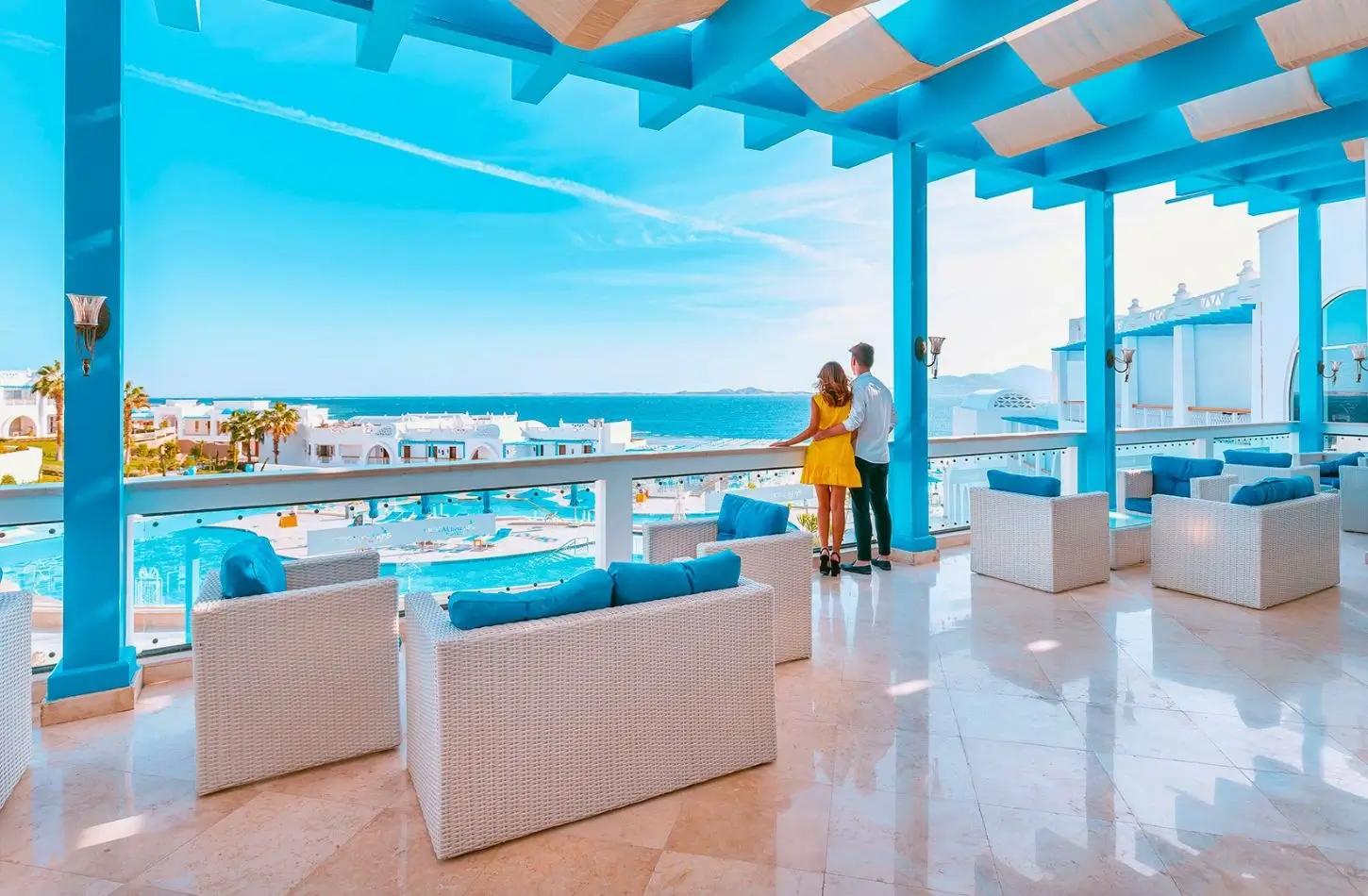
Hurghada sits approximately 45 minutes by air from Luxor and offers some of the most accessible coral reef snorkeling in the world — house reefs at several resorts begin just a few meters from the shoreline. Giftun Island, a 30-minute boat ride from the harbor, has clear water, colorful reef fish, and consistent conditions year-round.
For couples and families who want the full Egypt experience — pyramids, temples, Nile, and beach — this 7-day Egypt itinerary with beach route is the ideal structure. It doesn’t rush the historical sites, and it gives you a genuine decompression before the flight home.
Egypt Itinerary 7 Days Cost — What to Budget
One of the most common questions when planning this trip is how much it actually costs. The honest answer is: it depends on your travel style, but Egypt offers remarkable value compared to other long-haul destinations.
Budget traveler: starts at $700 per person for 7 days. This assumes budget hotels, group tours, overnight trains instead of domestic flights, and street food for most meals.
Mid-range traveler: starts at $1,300 per person. This covers 3–4 star hotels or a standard Nile cruise cabin, private transfers, guided excursions, and restaurant meals. Most travelers fall into this bracket.
Luxury traveler: starts at $4,000 per person. Expect 5-star hotels, a luxury or dahabeya cruise, private Egyptologist-led tours, and VIP museum access.
💡Nada’s Tip, Egypt Travel Specialist: The highest hidden cost I see travelers overlook is entrance fee add-ons in the Valley of the Kings. The standard ticket covers three tombs, but the tombs of Seti I, Nefertari, and Tutankhamun each carry a separate premium fee — Nefertari’s tomb alone costs around $20. Decide in advance which premium tombs matter to you and budget accordingly, rather than making the decision under the midday sun with a guide waiting.”
Key cost components to plan for:
- Domestic flights (Cairo–Aswan, Luxor–Cairo): $120–$200 per flight per person
- 4-night Nile cruise (standard to luxury): starts at $450per person
- Entrance fees across 7 days: starts at $200per person, including Valley of the Kings, Karnak, GEM, and Giza
- Visa on arrival: $25 USD, paid in cash at Cairo airport
The Egypt itinerary 7 days cost is generally lower than a comparable week in Europe or Southeast Asia’s tourist hotspots, particularly for accommodation and meals. Booking a private guided package tends to save money compared with arranging each component separately — logistics in Egypt are complex, and the price difference between going alone and booking through a reputable operator is often smaller than travelers expect.
What to Buy in Egypt — Souvenirs and Shopping on Your 7-Day Trip
Every stop on your 7-day Egypt tour itinerary has its own shopping personality. Knowing where to buy what saves time, money, and the frustration of hauling fragile items across four cities.
Cairo — Khan el-Khalili and the grand bazaar experience
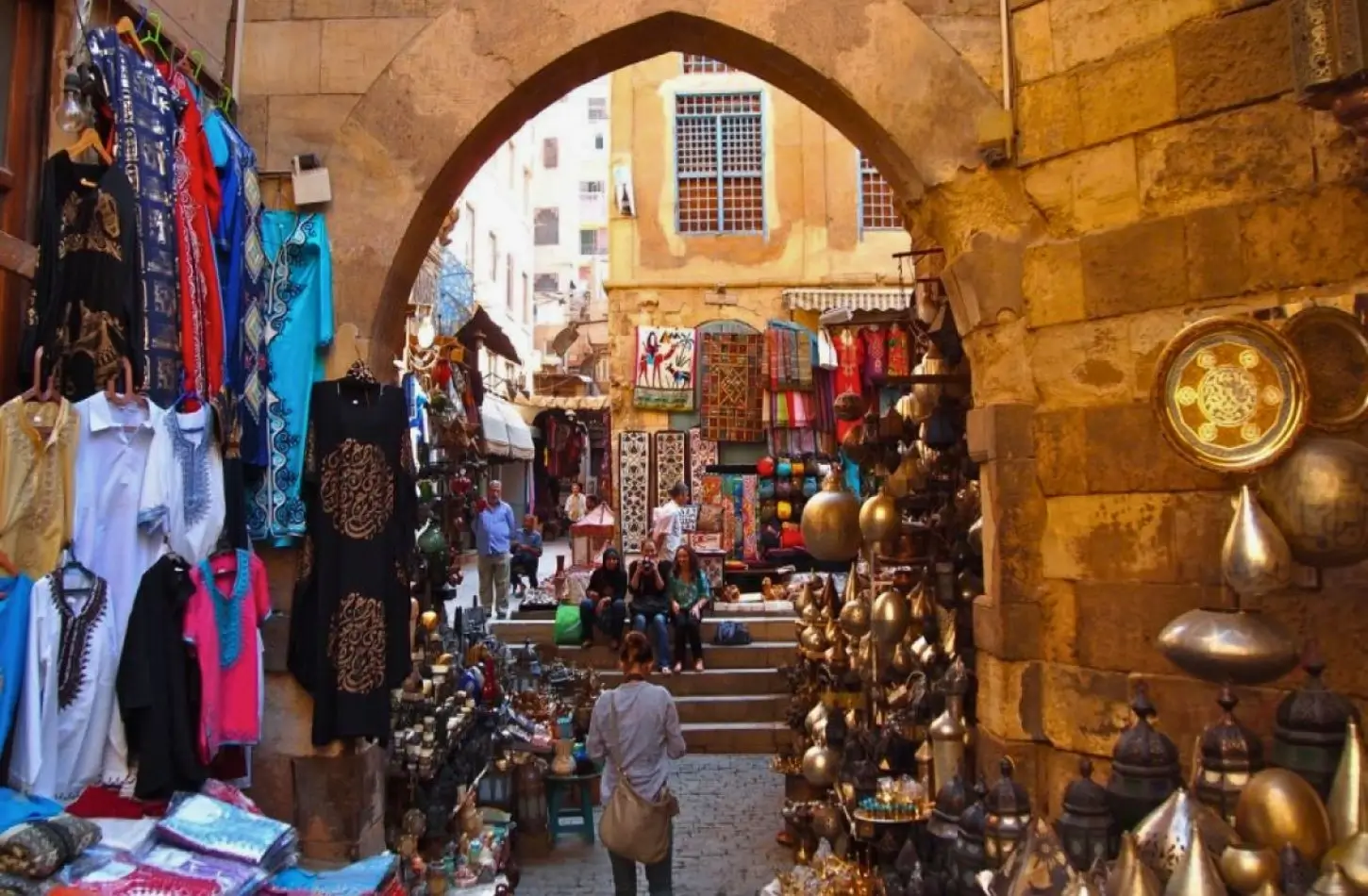
Khan el-Khalili in Islamic Cairo is the natural first stop. The market has operated continuously since the 14th century and covers everything from gold cartouche jewelry engraved with your name in hieroglyphics to hand-painted papyrus, to copper lanterns and spices. Bargaining is expected and part of the experience — open with roughly half the first price quoted and work from there. For a more curated, less chaotic shopping experience, the Souk al-Fustat near Coptic Cairo offers high-quality handmade ceramics and textiles from local artisans at fixed prices.
Aswan — Nubian crafts and spices
Aswan’s souk along the Corniche specializes in Nubian handicrafts — brightly coloured galabeyas, handwoven baskets, karkadeh (dried hibiscus for tea), and spices in brilliant open sacks. Prices here tend to be lower than in Cairo, and the atmosphere is less aggressive. This is the best place to buy spices in bulk for home cooking.
Luxor — alabaster and temple-adjacent markets
Luxor’s markets near the West Bank are strong for alabaster — the white-veined stone used by the pharaohs for ceremonial vessels and today carved into small sculptures, bowls, and pyramid replicas. The most reliable pieces come from workshops in Qurna village rather than from stalls directly outside temples.
For a deep dive into what souvenirs to buy in Egypt — including authenticity tests for papyrus and how to spot genuine Egyptian cotton — visit our dedicated Egypt souvenirs guide. And if you’re planning extra shopping days in the capital, our full Cairo shopping guide covers the best shopping malls in Cairo alongside traditional market routes.
Egypt Travel Tips for First-Time Visitors
A few practical points that make a meaningful difference on a 7 day itinerary:
Start early, every day. Egypt’s major sites are outdoors and unshaded. The Pyramids, the Valley of the Kings, and Karnak should all be visited before 10 AM during peak season. The difference between a 7 AM arrival and a 10 AM arrival is the difference between a peaceful experience and a crowded, sweaty one.
Carry Egyptian Pounds in small notes. Credit cards are unreliable outside major hotels. ATMs in airports and city centers work well; draw cash early and keep a separate pocket of small bills for tips, bathroom attendants, and market purchases.
Book domestic flights in advance. Cairo–Aswan and Luxor–Cairo routes can sell out, particularly in peak season (October–April). EgyptAir operates the most frequent services. Book as soon as your international flights are confirmed.
Dress modestly at religious sites. Covered shoulders and knees are required at mosques and strongly advisable at Coptic churches and conservative market areas. Lightweight linen layers are the practical answer — they protect from both the sun and dress codes.
Hire a licensed Egyptologist guide for the key sites. The Valley of the Kings and Karnak Temple have minimal English signage and dense historical context. A good guide transforms these visits from checklist ticking into something genuinely moving. Tripianto’s Luxor tours include certified Egyptologist guides on every departure.
Check your visa requirements before booking. Most nationalities qualify for a visa on arrival ($25 USD, cash only, at Cairo airport) or an e-visa applied online in advance. Always check current requirements through your government’s travel advice portal before travel.
Best Time to Visit Egypt for a 7-Day Itinerary
Egypt’s climate divides neatly into three travel windows:
October to April (Peak Season): Temperatures range from 18°C to 28°C across most of the country. This is the most comfortable window for a 7-day Egypt tour, and the most popular — book accommodation and Nile cruises at least three months in advance during December–January.
May and September (Shoulder Months): Temperatures climb to the low 30s °C, but crowds thin considerably, and prices drop by 15–25%. May is particularly good value, as the busiest winter season has ended but the desert heat hasn’t fully arrived.
June to August (Summer): Temperatures regularly exceed 40°C in Luxor and Aswan. This is challenging but manageable with early-morning starts, midday rest, and air-conditioned transport. Budget travelers who don’t mind the heat will find the lowest prices and thinnest crowds of the year.
Ramadan: Timing shifts annually. During Ramadan, restaurants reduce hours, some sites open later, and the evening atmosphere in Cairo becomes uniquely festive. It’s a rewarding time to visit if you’re culturally curious, though logistics require more flexibility.
Egypt Itinerary 7 Days: Frequently Asked Questions
Is 7 days enough time to visit Egypt?
Yes, but it is a fast-paced “highlight reel.” A 7 day itinerary gives you just enough time to cover Egypt’s “Big Three” destinations: Cairo (The Pyramids & Museums), Luxor (Valley of the Kings & Karnak), and Aswan (Philae Temple & Abu Simbel). Because a standard Nile Cruise takes 3 to 4 nights to sail between Luxor and Aswan, trying to fit one into a 7-day trip will leave you with very little time in Cairo. To do a 7-day trip right, most experts recommend skipping the cruise and booking domestic flights between Cairo, Aswan, and Luxor to maximize your sightseeing time.
What is the best 7-day Egypt itinerary?
The most efficient, crowd-pleasing route for a one-week stay is the Classic Ancient Egypt Circuit:
- Day 1: Arrive in Cairo, see the Giza Pyramids, Sphinx, and the Grand Egyptian Museum (GEM).
- Day 2: Explore Islamic & Coptic Cairo (Khan el-Khalili bazaar), then take an evening flight to Aswan.
- Day 3: Visit Philae Temple and take a traditional Felucca boat ride on the Nile.
- Day 4: Take an early morning day-trip to the massive rock-cut temples of Abu Simbel, then catch a 3-hour train or private driver to Luxor.
- Day 5: Explore Luxor’s East Bank (Karnak and Luxor Temples).
- Day 6: Explore Luxor’s West Bank (Valley of the Kings & Hatshepsut Temple), then fly back to Cairo.
- Day 7: Final souvenir shopping in Cairo and departure
How much does a 7 day Egypt itinerary cost?
Egypt is highly customizable for different budgets. On average, excluding international flights: Budget (starts at $450USD): Staying in local guesthouses (like those on Aswan’s Elephantine Island), using trains or buses between cities, and exploring without private guides. Mid-Range (starts at $800 USD): Staying in 4-star hotels, booking domestic flights, and hiring private tour guides/drivers for the major archaeological sites.Luxury (starts at $2,500+ USD): Staying at iconic historic properties (like the Marriott Mena House overlooking the Pyramids), chartering a private Dahabiya (luxury sailboat), and all-inclusive VIP tours.
Can you do a Nile Cruise on a 7-day trip?
You can, but it requires sacrificing other major experiences. A typical Nile cruise sails between Aswan and Luxor and requires 3 to 4 nights on board. If you spend 4 nights on a cruise and 1 full day traveling, you are left with only 1 or 2 days for Cairo. You would have to completely skip sites like Saqqara, Abu Simbel, or the historic markets of Cairo. If a relaxed Nile Cruise is a non-negotiable for you, extending your trip to 8 to 10 days is highly recommended.
What is the best month to do a 7-day Egypt tour?
The best time to visit is during the cooler months from October to April. High Season (December – February): Offers the most comfortable weather (70s°F / 20s°C), but has the highest prices and maximum crowds. Shoulder Season (October–November & March–April): This is the sweet spot for a 7-day trip. The weather is warm but manageable, and crowds are thinner, meaning you lose less time waiting in lines at tight tomb entrances. Avoid May to September if possible, as temperatures in Luxor and Aswan routinely cross 105°F (40°C), making fast-paced sightseeing exhausting.
conclusion
Seven days is the ideal entry point for Egypt — enough time to stand inside a 4,500-year-old burial chamber, sail past sandstone cliffs at sunset, and still have an evening to browse Khan el-Khalili for gold cartouche jewelry. The route in this guide — Cairo, Aswan, Nile cruise, Luxor, and an optional Red Sea ending — has been refined over years of group and private tours because it simply works. If you want this itinerary planned and booked end to end, with a private Egyptologist and airport transfers included.
