


Last verified: July 2026
Quick Answer
❓ What is Philae Temple & is it worth visiting in Aswan?
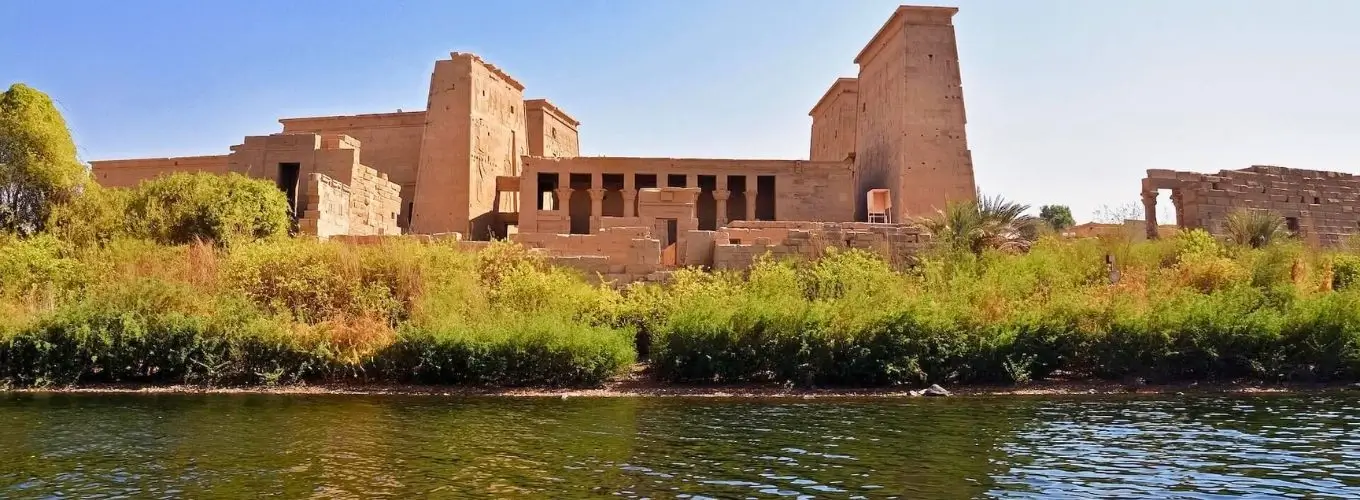
Yes — Philae Temple is a Ptolemaic sanctuary on Agilkia Island near Aswan, dedicated to Isis, built 280 BC and rescued by UNESCO in the 1970s.
🛶 Reach by motorboat from Aswan dock boat fare is separate from entry ticket (~$8–10).
🕖 Open daily 7 AM–4 PM arrive early before cruise groups flood in from 10 AM.
🏛️ Don’t miss Trajan’s Kiosk & Hathor Temple allow 60–90 min for the full complex.
🌙 Evening Light Show costs $15–20 Isis story narrated over lit pylons after dark.
Philae Temple is an island sanctuary near Aswan dedicated to the goddess Isis, and it’s one of the best-preserved temple complexes in Egypt. Unlike Luxor or Karnak, Philae Temple wasn’t just excavated — it was dismantled stone by stone and rebuilt on higher ground to save it from the rising waters of the Aswan High Dam, which is why it feels so complete and so quiet compared to Egypt’s mainland temples. Most visitors reach it by a short motorboat ride from the Aswan dock, and many combine the daytime visit with the evening Light Show for two very different experiences of the same site. If you’re planning an Aswan itinerary, Philae usually pairs with the High Dam and the Unfinished Obelisk in a single Aswan day tour.
Philae Temple History
Philae’s story as a religious site stretches back further than most visitors expect. The earliest confirmed structures on the original island date to the 7th or 6th century BC, under rulers like Taharqa and Psamtik II, but the site became genuinely significant a few centuries later, when it developed into the center of the cult of Isis during the Ptolemaic period. Ptolemy II Philadelphus began the main Temple of Isis in the 3rd century BC, and construction and decoration continued for generations — additions came from Ptolemy III, and later from Roman emperors including Augustus, Tiberius, and Hadrian, who added a gateway west of the main complex.
What makes the history of Philae Temple unusual is how long the site remained active. While most of Egypt’s ancient religion had faded under Roman and then Christian rule, worship of Isis continued at Philae until the reign of Byzantine emperor Justinian I closed the temple in the 6th century AD — making it effectively the last functioning temple of the old Egyptian religion. Christian communities later converted parts of the complex into churches, and you can still see carved crosses on some walls today, a visible layer of the site’s religious transitions.
💡 Ahmed’s Tip: Look for the small chapel dedicated to Imhotep near the Temple of Isis — it’s often skipped by rushed group tours, but it tells the more human side of Philae’s history as a place of healing pilgrimage, not just imperial religion.
When Was Philae Temple Built
There isn’t a single build date for Philae Temple, because the complex grew over roughly 800 years. The earliest religious structures on the original island appeared in the 7th–6th century BC. The centerpiece most visitors come to see — the Temple of Isis — was begun under Ptolemy II Philadelphus around 280 BC and was largely completed under his successor, Ptolemy III Euergetes, in the following decades. Decoration work, however, continued well into the Roman period, with reliefs and additions dating to the reigns of Augustus, Tiberius, and Hadrian between 30 BC and 138 AD.
So when people ask “when was Philae Temple built,” the honest answer has three layers: the site’s religious use began in the Late Period, its main temple was constructed in the Ptolemaic era, and its decoration wasn’t finished until Roman times. That layered timeline is part of what makes Philae valuable to archaeologists — it’s effectively a cross-section of nearly a millennium of Egyptian religious architecture in one location.
When Was Philae Temple Built
There isn’t a single build date for Philae Temple, because the complex grew over roughly 800 years. The earliest religious structures on the original island appeared in the 7th–6th century BC. The centerpiece most visitors come to see — the Temple of Isis — was begun under Ptolemy II Philadelphus around 280 BC and was largely completed under his successor, Ptolemy III Euergetes, in the following decades. Decoration work, however, continued well into the Roman period, with reliefs and additions dating to the reigns of Augustus, Tiberius, and Hadrian between 30 BC and 138 AD.
So when people ask “when was Philae Temple built,” the honest answer has three layers: the site’s religious use began in the Late Period, its main temple was constructed in the Ptolemaic era, and its decoration wasn’t finished until Roman times. That layered timeline is part of what makes Philae valuable to archaeologists — it’s effectively a cross-section of nearly a millennium of Egyptian religious architecture in one location.
Philae Temple Isis
Philae Temple is dedicated to Isis, the goddess of magic, healing, and motherhood, and one of the most widely worshipped deities in the ancient Mediterranean world. According to myth, Isis reassembled the body of her murdered husband Osiris and used her magic to briefly restore him to life, conceiving their son Horus in the process. That story of loyalty, resurrection, and protective magic made Isis enormously popular — her cult eventually spread from Egypt to Greece and Rome, and Philae became her most important cult center.
The temple’s reliefs tell this story in sequence: scenes of Isis mourning Osiris, gathering his scattered remains, and nursing Horus appear throughout the complex, particularly in the birth house (mammisi) dedicated to Horus’s childhood. A smaller temple on the site honors Hathor, often linked with Isis in Egyptian religion, and its column capitals are carved with music and celebration scenes rather than solemn ritual ones — a nice contrast if you’re visiting with kids or anyone who assumes all Egyptian temples look the same.
Because Isis was seen as a protector of the dead and the living alike, Philae attracted pilgrims from across the ancient world, including Nubia to the south — one reason the temple’s builders added inscriptions and imagery specifically aimed at Nubian visitors.
When Was Philae Temple Moved
Philae Temple was dismantled and relocated between 1972 and 1980, moved from its original island to nearby Agilkia Island, about 500 meters away, where it stands today. The move became necessary because of the Aswan Dam. The first Aswan Low Dam, completed in 1902, already caused the island to flood for part of each year; when the Aswan High Dam was built between 1960 and 1970, engineers realized Philae would be permanently submerged.
UNESCO led an international rescue campaign, working with Egyptian authorities to build a cofferdam around Philae Island, pump out the water, and then take the complex apart piece by piece — an estimated 40,000 to 50,000 individual blocks were numbered, removed, and transported to Agilkia Island, which was reshaped to resemble the original site’s layout before the temple was reassembled stone by stone. The project finished in 1980, and Philae reopened to visitors on its new island shortly after.
💡 Ahmed’s Tip: Ask your guide to point out the faint number markings still visible on some blocks near the base of the columns — leftovers from the 1970s relocation numbering system, and a small detail most tour groups walk straight past.
What to See at Philae Temple
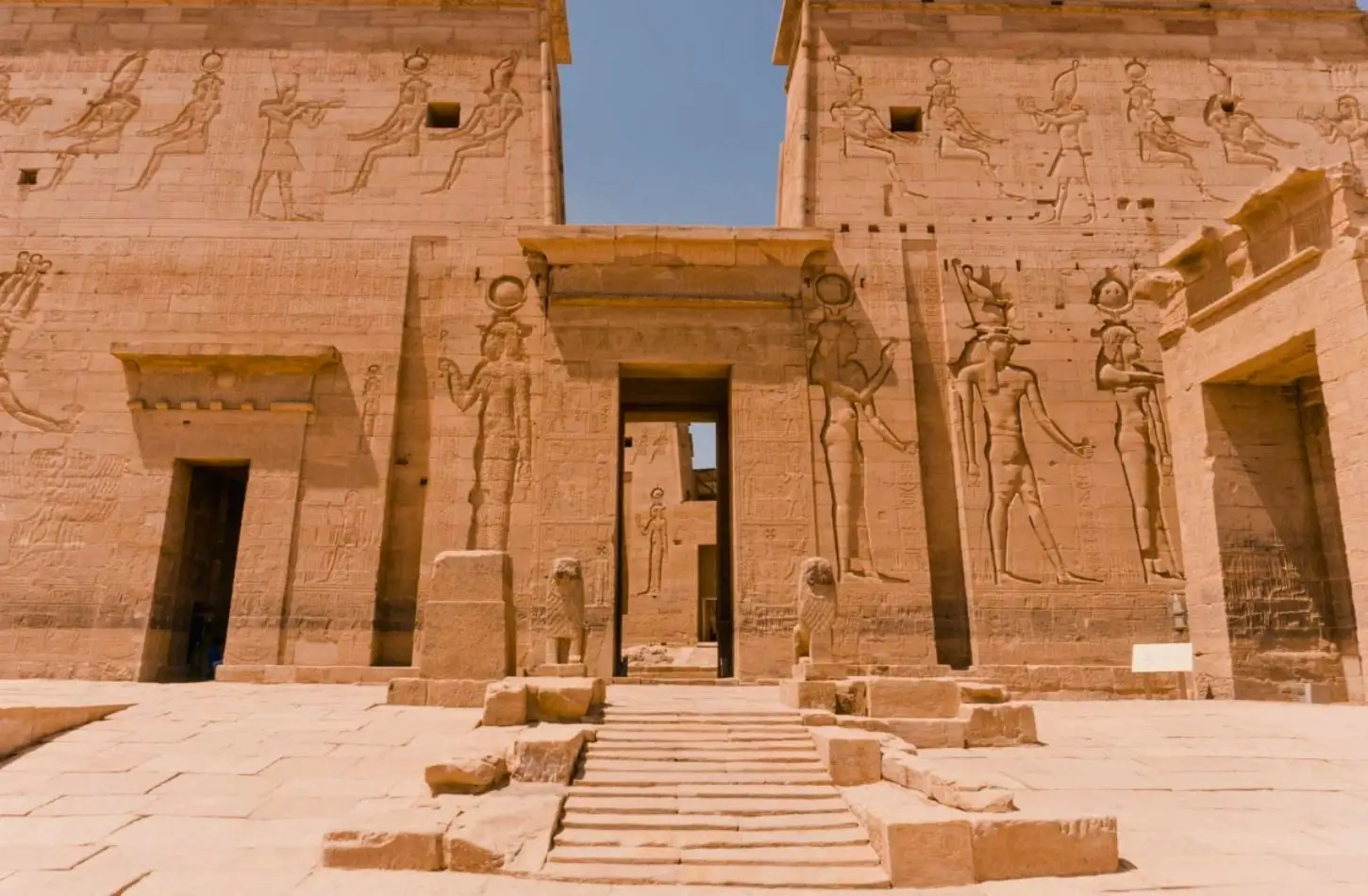
The main event is the Temple of Isis itself, entered through two monumental pylon gateways covered in reliefs of Ptolemaic kings smiting enemies before the gods — classic Egyptian propaganda imagery, just centuries later than the version most visitors have seen at Karnak or Luxor Temple. Past the pylons, the hypostyle hall’s columns are some of the best-preserved in Egypt, still showing traces of original paint in places.
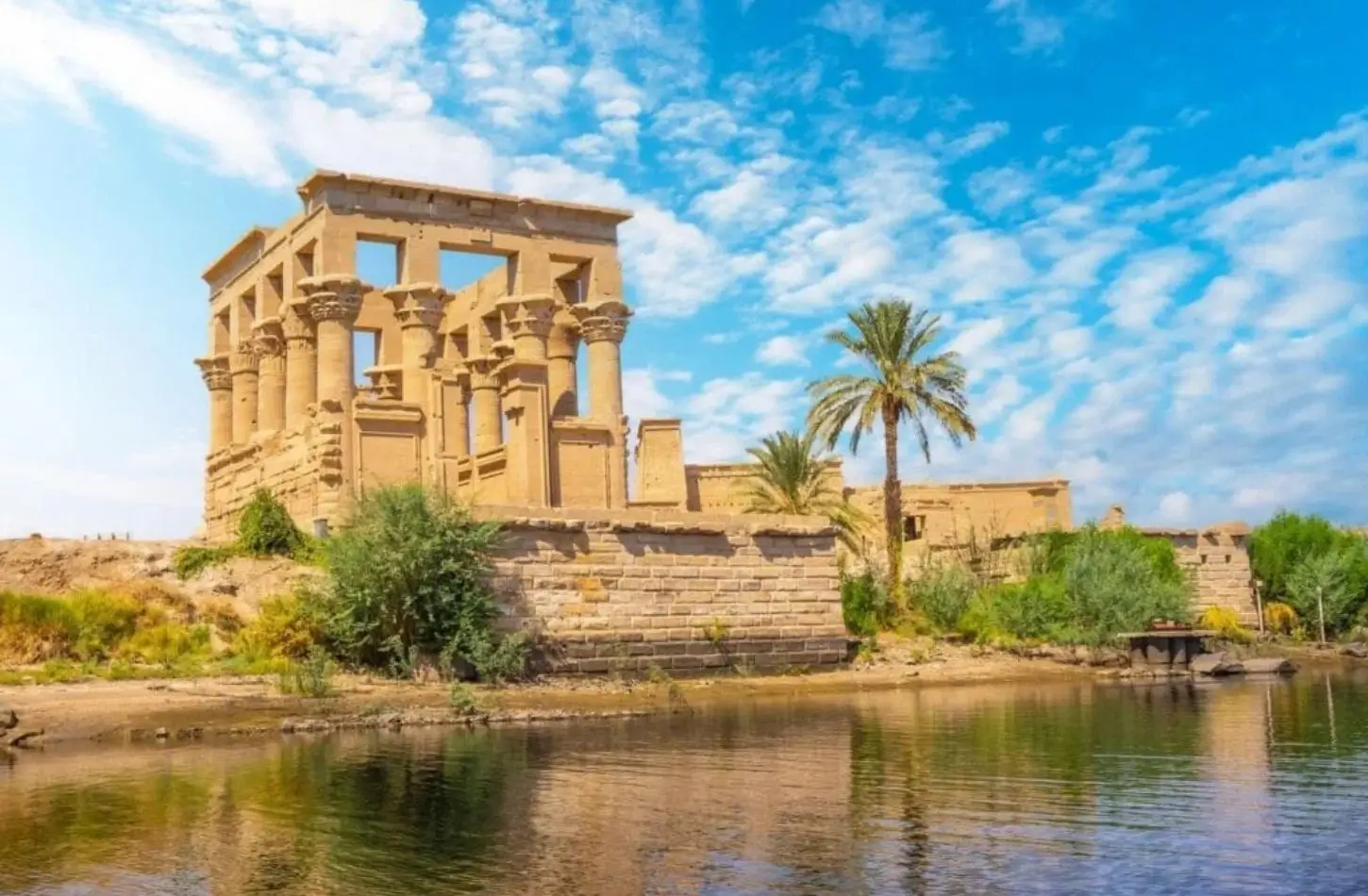
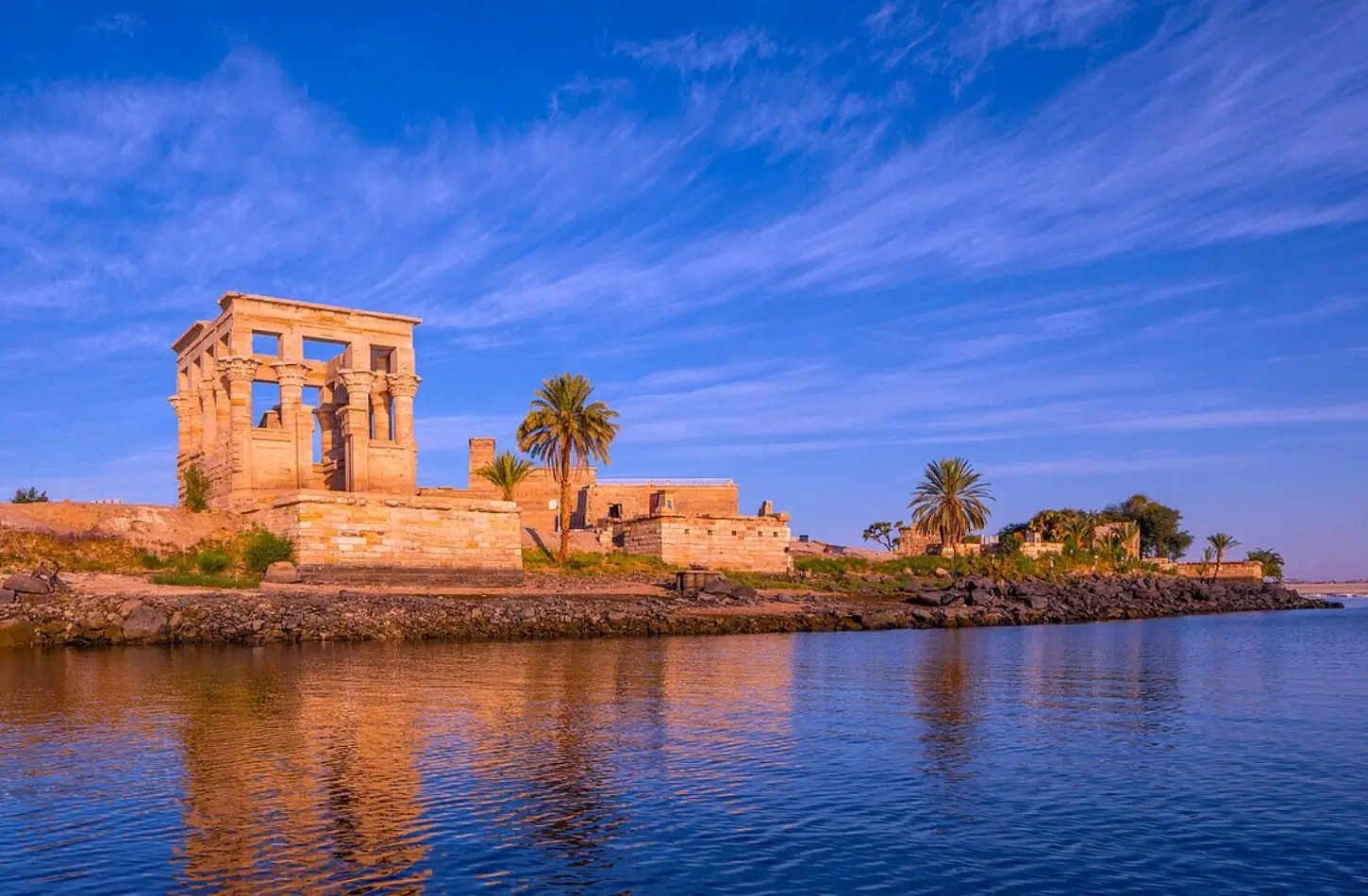
Beyond the main temple, don’t skip the Kiosk of Trajan, an open pavilion with 14 ornate columns that’s become the unofficial postcard image of Philae — it’s unfinished, which oddly makes the carving process easier to study since you can see reliefs at different completion stages side by side. The Temple of Hathor sits nearby with its music-themed reliefs, and the Gate of Hadrian offers a view toward the original, now-submerged island site, along with a relief depicting the source of the Nile.
For travelers combining Philae with a longer Nile itinerary, it’s worth comparing the site against Karnak Temple and Luxor Temple — Philae is smaller and quieter than both, with far fewer crowds, which is part of its appeal on a multi-temple trip.
Philae Temple Timings(opening hours)
Philae Temple is open daily from around 7:00 AM to 4:00 PM, though last entry is typically an hour before closing. Standard adult entry costs roughly USD 8–10 (EGP 500–550), with reduced student rates for valid ID holders. These prices are set by the Egyptian Ministry of Tourism and Antiquities and can shift, so it’s worth confirming current rates before your visit.
Morning is the best window for photography and comfort — arriving close to opening avoids both the midday heat (especially April through September) and the larger tour groups that tend to arrive from around 10 AM once Nile cruise ships have docked. Aswan’s dry heat makes even a 40°C day at Philae more bearable than the same temperature in Cairo, but bring water and a hat regardless of season. If you’re weighing this against your wider trip dates, October through April is generally considered the best time to visit Egypt for comfortable sightseeing across Aswan, Luxor, and Cairo alike — Philae included.
Note that entry doesn’t include the boat ride to the island — a separate short motorboat trip from the dock is required and is typically negotiated or booked alongside your ticket, unless you’re on a pre-arranged tour where transport is already included.
How to Get to Philae Temple
Philae Temple sits on Agilkia Island, about 8–9 km from central Aswan, and it can only be reached by boat — there’s no bridge or public ferry, only privately operated motorboats from the pier near the temple’s ticket office. Most independent travelers take a taxi to the dock, then negotiate a boat price for the short crossing and return trip.
The simpler option, and the one most Tripianto travelers choose, is a guided tour that bundles Philae Temple with the High Dam and the Unfinished Obelisk, with transport, boat transfer, and a licensed Egyptologist guide all arranged in advance. If Philae is part of a longer Nile itinerary, it’s typically included as a standard stop on Nile cruises between Luxor and Aswan, usually on the final morning before disembarkation.
Philae Temple Light Show
The Philae Temple Light Show is an evening sound-and-light presentation that narrates the story of Isis, Osiris, and the temple’s own rescue from the rising Nile, projected across the illuminated columns and pylons after dark. There are usually two showings a night, with start times shifting seasonally (roughly 6:30–9:30 PM), and the show runs about an hour. Language rotates by night — English, French, German, Spanish, Arabic, and others are typically available on a published weekly schedule, so it’s worth checking which languages are available before booking if you have a preference.
Tickets for the Light Show are bought separately from daytime temple entry, usually in the USD 15–20 range, and most visitors book through a tour operator who also arranges the boat transfer, since there’s no public transport to the island after dark. The atmosphere is genuinely different from a daytime visit — walking through a lit temple complex at night, with the story of Isis narrated over the ruins, is one of the more memorable evening experiences in Aswan, and pairs well with dinner on a felucca beforehand.
💡 Ahmed’s Tip: If you only have one evening in Aswan, prioritize the Light Show over a felucca sunset sail — you can do a felucca almost anywhere on the Nile, but the Philae narration only happens here.
Insider Tips for Visiting Philae Temple
- Go early or go for the show, not the middle of the day. Between 10 AM and 2 PM the island gets crowded with cruise groups; either the first hour after opening or the evening Light Show avoids the crush.
- Wear closed shoes with grip. Some of the temple flooring is uneven original stone, and the boat dock can be slippery.
- Bring small cash for the boat. Boat transfers are often paid separately in cash (EGP or small USD notes), so don’t rely on cards at the dock.
- Pair it with the High Dam and Unfinished Obelisk. All three sites sit close together in Aswan and are almost always combined into a single half-day itinerary.
- Budget a minimum of an hour. Rushed 20-minute stops miss the Kiosk of Trajan and the Temple of Hathor, which sit slightly off the main axis.
- If you’re sensitive to heat, choose winter months. October–April keeps daytime temperatures comfortable for the open-air walk between temple sections.
FAQS about Philae Temple
When was Philae Temple built?
Philae Temple was built in stages over roughly 800 years. Religious structures first appeared on the original island in the 7th–6th century BC, but the main Temple of Isis was begun around 280 BC under Ptolemy II and decorated further under later Roman emperors through the 2nd century AD.
When was Philae Temple moved and why?
Philae Temple was moved between 1972 and 1980, from its original island to nearby Agilkia Island. The relocation was necessary because the Aswan High Dam, completed in 1970, would have permanently submerged the original site. UNESCO led the rescue, dismantling and reassembling roughly 40,000–50,000 numbered blocks.
What are Philae Temple’s opening hours?
Philae Temple is open daily from approximately 7:00 AM to 4:00 PM, with last entry around an hour before closing. Mornings are the quietest and coolest time to visit before Nile cruise groups arrive later in the day.
How much are Philae Temple Light Show tickets?
Light Show tickets typically cost around USD 15–20 per person, separate from daytime entry fees. Prices can vary by season and booking method, and most visitors book through a tour operator who also arranges the required boat transfer after dark.
Who is Philae Temple dedicated to?
Philae Temple is dedicated to Isis, the ancient Egyptian goddess of magic, healing, and motherhood. Reliefs throughout the complex depict her mourning, restoring Osiris and raising their son Horus, and the site became her most important cult center in the ancient world.
How do you get to Philae Temple from Aswan?
Philae Temple sits on Agilkia Island and is reachable only by a short motorboat ride from a dock roughly 8–9 km outside central Aswan. Most travelers combine the trip with a guided Aswan day tour that includes transport, boat transfer, and entry.
CONCLUSION
Philae Temple earns its reputation as one of Aswan’s most rewarding sites — not just for the Isis mythology carved into its walls, but for the remarkable 20th-century rescue that kept it standing at all. Whether you visit by day for the reliefs and quiet colonnades, or by night for the Light Show, it rewards unhurried time far more than a rushed stop between bigger sites. If you’re building out an Aswan itinerary, our Aswan day tours pair Philae Temple with the High Dam and Unfinished Obelisk with a licensed Egyptologist guide, or explore it as part of a full Nile cruise between Luxor and Aswan.
