


Last verified: May 2026
Quick Answer
Where should travellers shop in Cairo in 2026?
Cairo offers two main shopping experiences: traditional souks &(markets) for authentic crafts, spices & antiques, and modern malls for international brands. The best spots depend on what you’re looking for.
Bargain always haggling is expected in all local markets
Go early mornings are cooler and less crowded
Bring cash (EGP) most stalls don’t accept cards
Khan Al-Khalili is the #1 stop for first-time visitors
The first time most visitors walk into Khan Al-Khalili, they buy something they didn’t mean to, pay more than they should have, and walk out slightly dazed — clutching a papyrus that may or may not be real papyrus.
That’s not a failure. That’s Cairo doing what Cairo does.
I’ve been shopping these markets every week for five years as part of my work planning Tripianto’s Cairo shopping tours. In that time, I’ve watched travelers arrive with a vague idea — get some spices, maybe some gold — and leave either delighted or deflated, depending almost entirely on whether they knew where to walk and what to ask.
Cairo is one of the world’s genuinely great shopping cities. The things worth buying are still made here, by hand, by people who have been making them for generations. You just need to know where to look — and how to walk past the first stall.
your best places to shop in Cairo:
- Khan El Khalili — Historic Market — Best for: Jewelry, spices, souvenirs, antiques
- Al-Muizz Street — Historic Market — Best for: Egyptian cotton, leather, papyrus art
- Souk al Fustat — Historic Market — Best for: Fixed-price artisan crafts, copperware
- Cairo Festival City Mall — Mall — Best for: Luxury brands, dining, dancing fountain
- Mall of Egypt — Mall — Best for: International fashion, indoor ski resort
- City Stars Mall — Mall — Best for: 600+ stores, cinema, kid-friendly attractions
- El Sagha Souq (Gold Market) — Historic Market — Best for: Gold jewelry, fine craftsmanship
Where to Shop in Cairo: Markets vs. Malls at a Glance
Before diving in, here is an honest orientation. Cairo’s shopping scene splits clearly into two worlds, and what you are looking for determines where to go.
| Place | Type | Price Level | Haggling? | Best For | Location |
|---|---|---|---|---|---|
| Khan El Khalili | Historic Market | EGP 50–2,000+ | Yes — expected | Jewelry, spices, souvenirs | Islamic Cairo |
| Al-Muizz Street | Historic Market | EGP 50–1,500 | Yes — expected | Cotton, leather, papyrus | Islamic Cairo |
| Souk al Fustat | Historic Market | EGP 100–2,500 | Limited — mostly fixed | Artisan crafts, copperware | Coptic Cairo |
| Souk Al Khayamiya | Historic Market | EGP 200–800+ | Yes — expected | Hand-stitched tentmaker textiles | Islamic Cairo |
| El Sagha Souq | Historic Market | Market gold rate | Limited on gold price | Gold jewelry | Islamic Cairo |
| Suuq el Ataba | Historic Market | EGP 30–500 | Yes — expected | Budget fabrics, everyday goods | Downtown Cairo |
| Wekalet El Balah | Historic Market | EGP 30–400 | Yes — expected | Budget clothing, textiles | Downtown Cairo |
| Cairo Festival City Mall | Mall | Fixed, mid–high | No — fixed price | Luxury brands, dining | New Cairo |
| Mall of Egypt | Mall | Fixed, mid–high | No — fixed price | Fashion, indoor ski resort | 6th of October City |
| City Stars Mall | Mall | Fixed, mid–high | No — fixed price | 600+ stores, entertainment | Heliopolis |
| Mall of Arabia | Mall | Fixed, mid–high | No — fixed price | Open-air fashion, dining | 6th of October City |
| Galleria40 | Mall | Fixed, high | No — fixed price | Designer boutiques, fine dining | Sheikh Zayed City |
I have been walking these markets and malls weekly for five years as part of my work consulting on Tripianto‘s Cairo shopping tours. The recommendations below are based on that firsthand experience — not a list compiled from other lists.
Planning a trip to Egypt?
From the Pyramids to the Red Sea, our Egypt Travel Packages take care of everything — so you can focus on the experience, not the logistics.
Best Traditional Markets & Souks in Cairo
1- Khan Al-Khalili — Cairo’s Great Bazaar
Founded: 1382 AD by Emir Djaharkas al-Khalili | Location: Al-Hussein Square, Islamic Cairo | Best time to visit: 10 am–noon or after 8 pm | Entry: Free
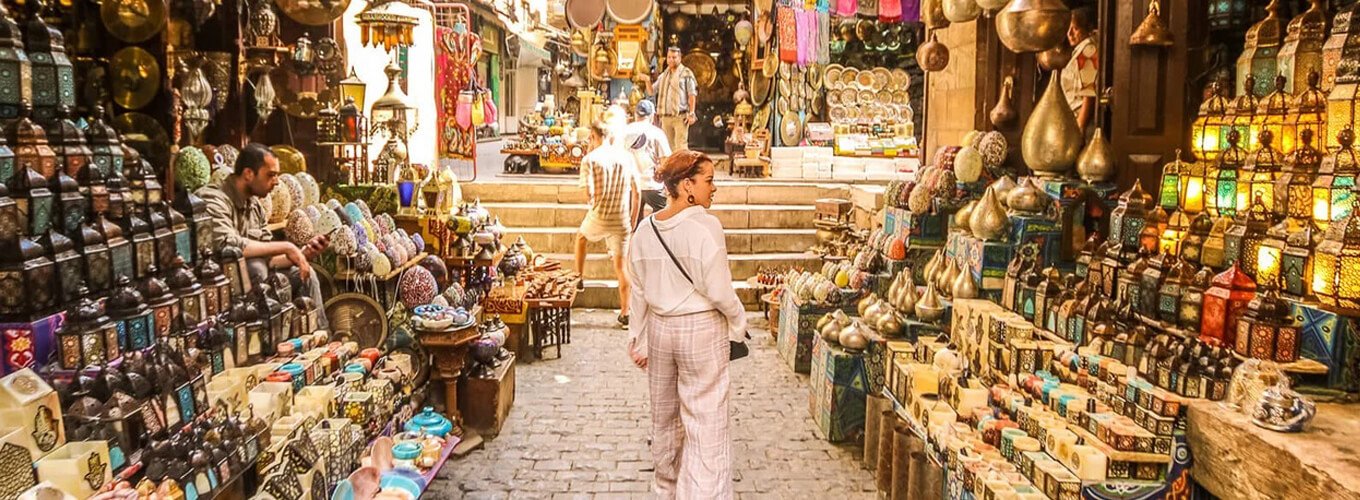
Khan Al-Khalili is the oldest continuously operating market in Cairo — and probably in Africa. It sits in the heart of Islamic Cairo, next to Al-Azhar Mosque, and covers a dense network of covered alleys, open courtyards, and specialized craft districts that have each occupied the same streets for centuries.
The single most important thing to know: the first 200 meters inside the main entrance are almost entirely tourist-facing stalls. Walk past them. The real Khan Al-Khalili — the copper workshops, the gold souk, the spice district, the perfume lanes — is deeper inside and is entirely different in character, price, and quality.
Nada’s route through the market: Enter from Al-Hussein Square → walk past the tourist stalls → turn left into the spice and perfume district (Souk Al-Attarine) → continue to the copper workshop alleys (Haret el-Nahaseen) → stop at El-Fishawy Café for tea (open since 1773; glass of mint tea: 20–40 EGP) → head north into the gold souk. Allocate at least three to four hours.
What to buy and what to pay (May 2026 prices):
| Item | Fair Price (EGP) | Approx. USD | Notes |
|---|---|---|---|
| Silver cartouche pendant | 800–1,500 EGP | $16–30 | 30–60 min engraving while you wait. Look for the 925 hallmark. |
| Hand-engraved copper tray (30–40 cm) | 300–600 EGP | $6–12 | Workshop price. Tourist alley: 800+ EGP for machine-made. |
| Perfume oil, 10ml single-note | 150–400 EGP | $3–8 | Genuine oil is thick and does not evaporate quickly on skin. |
| Perfume oil, 30ml custom blend | 400–900 EGP | $8–18 | Allow 20–30 min to smell and blend. |
| Small hand-painted papyrus | 150–300 EGP | $3–6 | Test: fold it — real papyrus bends without cracking. |
| Brass lantern, medium | 800–1,500 EGP | $16–30 | Hand-etched designs cost more and are worth it. |
| Cotton galabeya robe | 400–700 EGP | $8–14 | Standard quality; pure cotton feels soft, not stiff or shiny. |
| Spice bag, 200g | 50–200 EGP | $1–4 | Priority: karkade, cumin, black seed (nigella), cardamom. |
Pro tip from Nada: Gold is sold by weight at the daily Egyptian Chamber of Commerce rate — check the spot price on your phone before entering a gold shop. The making charge (the craftsman’s fee) is negotiable; the gold weight is not. Any jeweler who refuses to weigh a piece in front of you: walk out.
2- Souk Al Khayamiya — The Tentmakers’ Market
Location: Bab Zuweila, south of Khan Al-Khalili (15-min walk) | Best for: Unique textiles found nowhere else in the world
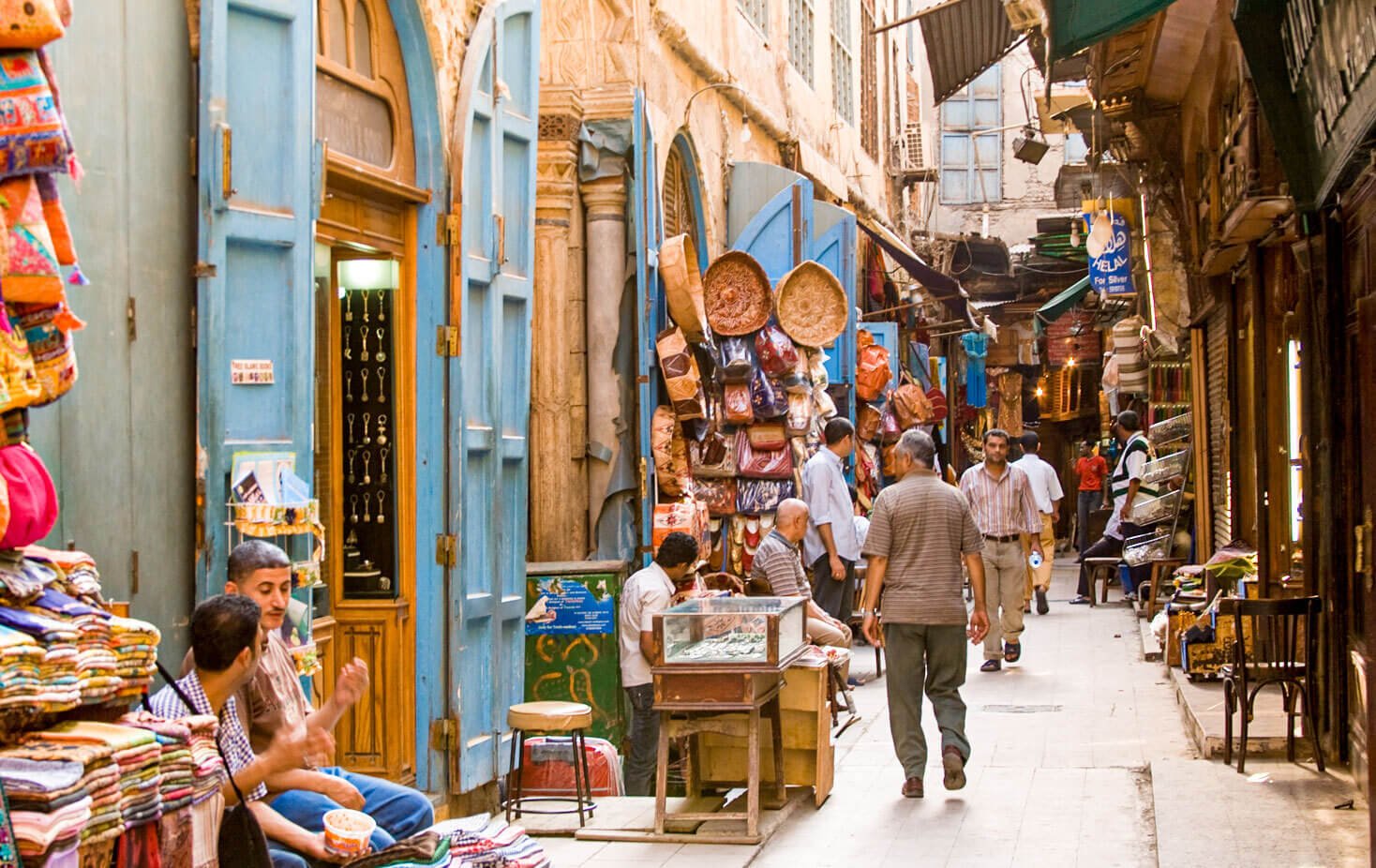
Souk Al Khayamiya is one of the most genuinely special shopping experiences in Cairo, and one of the most undervisited by tourists who spend all their time in Khan Al-Khalili. It sits under a vaulted medieval arcade just south of Bab Zuweila, one of the last standing Fatimid gates of Old Cairo.
Among the best places to shop in Cairo, the historic Tentmakers’ Street (Souq al-Khayamiya) stands out for its centuries-old craftsmanship. The tentmakers—known as khayamiya—have occupied this covered market for more than 600 years, preserving one of Egypt’s most distinctive traditional arts. They hand-stitch intricate appliqué fabric panels featuring geometric, floral, and Arabic calligraphic patterns that were originally created to decorate ceremonial tents for royal events, weddings, and religious celebrations.
Today, these skilled artisans use the same time-honored techniques to produce exceptional wall hangings, cushion covers, table runners, quilted textiles, and framed decorative panels. Every piece is handmade, making each one unique and a genuine work of Egyptian heritage that cannot be replicated by machines, making this market one of the best places to shop for authentic souvenirs and traditional handicrafts.
What to buy:
| Item | Fair Price (EGP) | Approx. USD |
|---|---|---|
| Small cushion cover | 200–400 EGP | $4–8 |
| Wall hanging, medium | 600–1,200 EGP | $12–24 |
| Large commissioned panel | 2,000+ EGP | $40+ |
To verify authentic hand-stitching: turn the piece over. Genuine Khayamiya has visible stitches on the back and slightly uneven edges. Machine-printed fabric looks perfectly uniform on both sides.
3- Souk al Fustat — Best for Authentic Handmade Crafts
Location: Near the Coptic Cairo complex, Old Cairo | Atmosphere: Calm, fixed-price, no haggling pressure
Among the best places to shop in Cairo, Souk Al Fustat remains one of the city’s best-kept secrets. It is where I recommend guests who are looking for authentic Egyptian craftsmanship without the crowds, noise, or persistent bargaining often found in Khan Al-Khalili. Located near the historic Coptic churches of Old Cairo, this thoughtfully organized artisan market offers a relaxed shopping experience, with each workshop dedicated to a specific traditional craft.
Visitors can watch skilled artisans handcraft ceramics, blown glass, copperware, textiles, woodwork, leather goods, and other handmade products using techniques passed down through generations. The craftsmen are usually present in their workshops, happy to demonstrate their skills, explain the history behind their work, and answer questions, making every purchase more meaningful. If you’re searching for the best places to shop for high-quality, authentic Egyptian handicrafts in a calm and welcoming atmosphere, Souk Al Fustat is an excellent choice.
You will find handmade copperware (decorative plates, trays, and lamps), Arabic calligraphy paintings, hand-stitched leather goods, and detailed mosaic pieces on tables, coasters, and framed wall art. Prices reflect genuine craft: this is not the cheapest market in Cairo, but it is the most reliable for quality. Many pieces come with authenticity information about the artisan who made them.
Best buys: Mosaic glassware, copper lanterns, leather-bound journals, calligraphy panels. Allow two to three hours and combine with a visit to the Coptic Cairo churches next door.
4- Souk Al-Attarine — The Spice and Perfume Market
Location: Immediately adjacent to Khan Al-Khalili, Islamic Cairo
Souk Al-Attarine is technically part of the Khan Al-Khalili complex but deserves its own visit. This is Cairo’s historic spice and perfume district, and the sensory experience alone — mountains of crimson karkade, towers of golden cumin, the thick sweetness of oud drifting from perfume shops — is worth making time for even if you buy nothing.
The spice market is one of the few places in Cairo where prices are genuinely reasonable without aggressive negotiation. A 200g bag of karkade (hibiscus) runs 60–100 EGP; a custom-blended ras el-hanout or baharat to your taste costs 60–120 EGP for 200g and is one of the most personal souvenirs you can take home. Saffron is sold here, but buy carefully — true saffron is expensive (1,500–3,000 EGP per gram); anything priced far below that is adulterated or substituted.
For perfume oils, the specialist shops here stock single-note Egyptian essences: jasmine from the Nile Delta, lotus, musk, amber, frankincense, and oud. A 10ml bottle of quality oil runs 150–400 EGP. Ask to smell before buying. Genuine Egyptian essential oil is thick and concentrated — it does not evaporate
5- Wekalet El Balah — Cairo’s Budget Fabric and Fashion Market
Location: Bulaq, between Zamalek and Downtown Cairo | Best for: Fabrics, textiles, second-hand clothing
Wekalet El Balah has been operating since the late 19th century as Cairo’s wholesale fabric and second-hand clothing hub. Located in the Bulaq district — a 10-minute walk from Zamalek — it is where Cairo’s tailors, designers, and fashion-conscious locals shop. For tourists, it is the best place to buy Egyptian cotton fabric by the meter, affordable galabeyas, curtain fabric, bed linen material, and a range of imported surplus clothing at very low prices.
The market is a genuine working market rather than a tourist destination: the passages are narrow and can get very crowded, especially on weekends. Weekday mornings are significantly calmer. There is no entrance fee. Haggling is expected — prices can typically be reduced by 30–50% from the initial quote.
Practical note: Wekalet El Balah is best navigated with a purpose. Decide in advance whether you are looking for fabrics, ready-made clothing, or leather goods, and ask a vendor to point you to the relevant section. The market is large, and the layout is not immediately obvious.
6- Al-Muizz Street — A Living Museum With Shops
Location: Runs from Bab el-Futuh (north) to Bab Zuweila (south), Islamic Cairo | Length: Approximately 1 km
Al-Muizz Street is the oldest surviving example of a medieval Islamic city in the world and is a UNESCO-recognized heritage site. It is also lined with small shops selling handmade jewelry, Egyptian cotton products, leather goods, spices, carpets, papyrus art, wooden carvings, and perfumes — all within one of the most architecturally stunning streets in the Middle East.
Unlike Khan Al-Khalili, Al-Muizz Street is walkable as a single route, with the historic monuments (the Qalawun Complex, Al-Aqmar Mosque, Bayt el-Suhaymi) providing natural pauses between shops. Evening is the best time to visit: after sunset, the medieval facades are lit, and the street is at its most atmospheric. Many shops stay open until 10–11 pm.
What to buy here: Handmade silver jewelry (100–600 EGP depending on piece), Egyptian cotton scarves (80–200 EGP), papyrus art from dedicated shops (150–500 EGP for medium pieces), and leather goods from workshops rather than tourist stalls.
7- El Azbakeya Wall — Cairo’s Open-Air Bookmarket
Location: Near Attaba Square, Downtown Cairo | Best for: Rare Arabic literature, vintage magazines, secondhand books
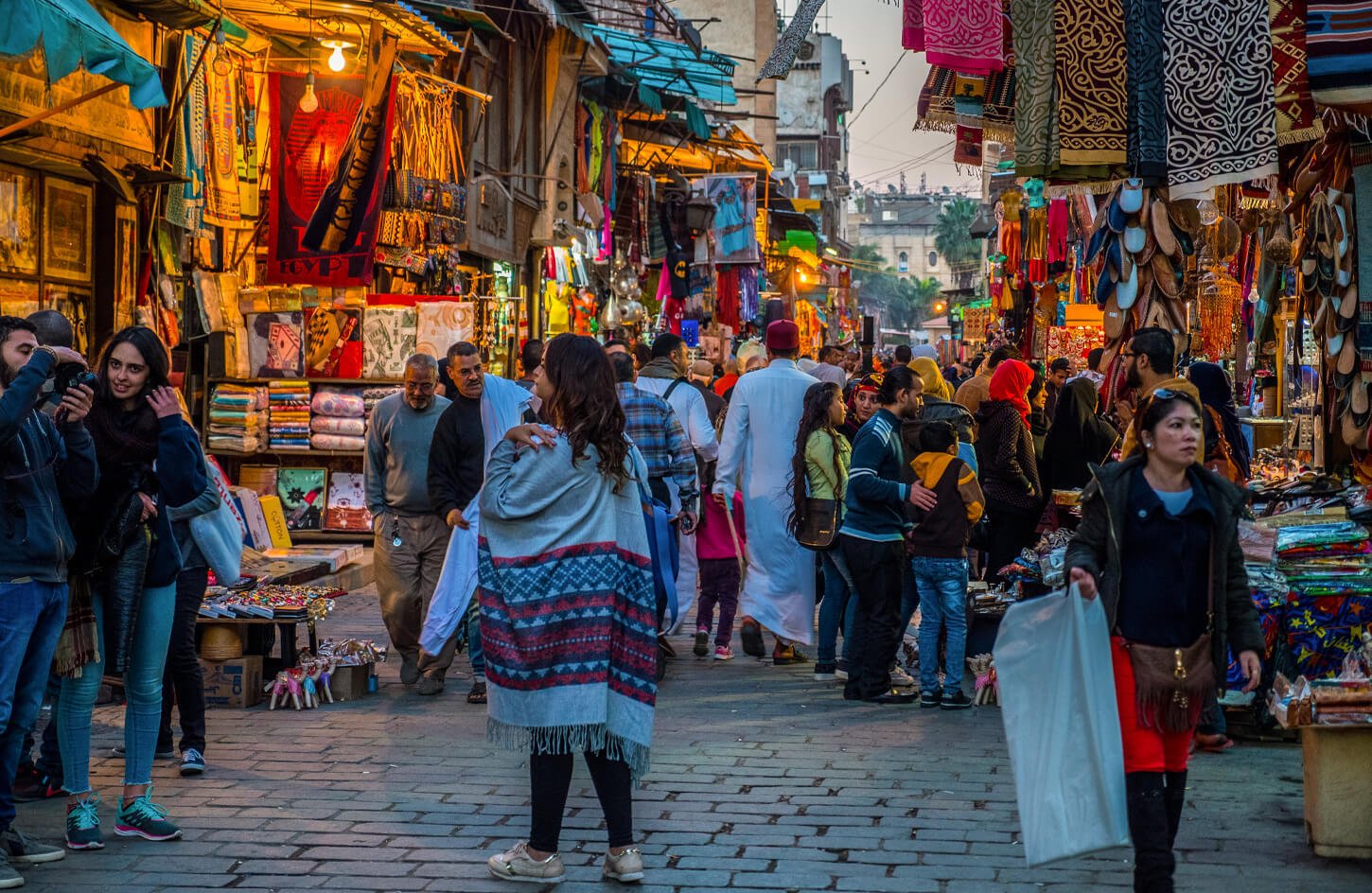
Among the best places to shop in Cairo for book lovers, El Azbakeya Wall is one of the city’s most distinctive and underappreciated destinations. This historic open-air book market stretches along the perimeter wall of Azbakeya Garden and has long been a favorite gathering place for readers, collectors, students, and researchers.
More than 130 stalls offer an extraordinary selection of books spanning the 1800s to the present day, including Arabic literature, rare manuscripts, first editions, English and French-language titles, vintage Egyptian newspapers and magazines from the early 20th century, academic textbooks, history books, children’s literature, and out-of-print publications. Whether you’re searching for a collectible volume, an affordable second-hand book, or a unique literary souvenir, El Azbakeya Wall is one of the best places to shop for an authentic cultural experience that reflects Cairo’s rich intellectual and literary heritage.
For book lovers, this is an unmissable stop — not just for the books but for the scene itself, which has changed very little since the 19th century. Prices are low and fixed for the most common titles; rare manuscripts and collectibles are negotiable.
8- El Sagha Souq — Cairo’s Gold Market
Location: Downtown Cairo, near Ataba Square
El Sagha is Cairo’s dedicated gold market — a concentrated network of jewelers in the Downtown area where gold is sold by weight at the daily Egyptian Chamber of Commerce rate. This is distinct from the gold souk inside Khan Al-Khalili: El Sagha primarily serves the local Cairo market, so prices and making charges tend to be lower and less inflated for tourists.
The market specializes in traditional Egyptian and Middle Eastern gold designs: wide cuff bracelets, filigree rings, intricate necklaces, and pharaonic motifs. If you want gold jewelry at genuinely competitive prices, El Sagha is the better choice over the tourist lanes of Khan Al-Khalili. As always, verify the hallmark (18k or 21k for gold) and insist on weighing before any price is agreed.
9- Mohammed Ali Street — Cairo’s Historic Music Quarter
Location: Runs south from the Citadel area toward Downtown Cairo | Correct characterization: Musical instruments and traditional arts
The original article incorrectly described Mohammed Ali Street as a fashion and accessories market. It is not. This street was built in the 1860s as part of Khedive Ismail’s modernization of Cairo and became — and remains — Cairo’s historic center for musical instruments, traditional crafts, and the performing arts. It was historically home to professional musicians, composers, and belly dancers.
Today, Mohammed Ali Street is worth visiting, specifically if you are interested in traditional Egyptian musical instruments: ouds, rebabs, tablas (hand drums), and mizmar wind instruments are sold and repaired in workshops along the street. Prices for a handmade tabla start around 300–800 EGP; a mid-quality oud runs 1,500–4,000 EGP. This is not a general souvenir street, but it is genuinely fascinating for what it is.
10- Suuq el Ataba — Downtown’s Working Market
Location: Ataba Square, Downtown Cairo
Suuq el Ataba is one of Cairo’s large working-class markets, concentrated around the central Ataba Square area. It serves as a hub for affordable everyday goods — clothing, shoes, bags, household items, and electronics. For tourists, it offers a genuinely local Cairo experience away from the tourist-facing souk atmosphere, with very low prices on clothing and practical goods. It is crowded, loud, and fast-paced: a real downtown market rather than a curated experience. Best visited in the morning.
Only in Cairo for a day?
Our Egypt Day Trips include Khan Al-Khalili, the Pyramids, and Cairo’s best markets — with a private guide who knows exactly where to go.
Best Shopping Malls in Cairo
Cairo’s mall scene has expanded dramatically over the last decade and now rivals that of any major regional city. The top malls are polished, safe, air-conditioned, and home to both international and Egyptian brands. All major malls accept credit and debit cards (Visa, Mastercard). Most are open 10 am–midnight daily, including Fridays.
The Six Best Cairo Malls — Honest Comparisons
Mall of Egypt — Best overall; largest in Cairo: Among the best places to shop in Cairo, Mall of Egypt is a top destination for modern retail and entertainment. Located in 6th of October City, it features over 350 local and international stores, along with fashion brands, electronics, restaurants, cafés, and VOX Cinemas. Its standout attraction is Ski Egypt, Africa’s first indoor ski resort, offering year-round snow experiences. Whether you’re shopping, dining, or enjoying family entertainment, Mall of Egypt is one of the best places to shop for a full-day outing in a comfortable, air-conditioned setting.
Cairo Festival City Mall — Best for international brands and atmosphere: Located in New Cairo, Cairo Festival City is widely considered the best all-round mall experience in the city. It carries the widest selection of international mid-to-high brands — Zara, H&M, Massimo Dutti, Mango, Michael Kors, Coach, Ted Baker, Tommy Hilfiger — alongside Egyptian designer boutiques. The open-air promenade features a famous dancing fountain show in the evenings. Dining options include Cheesecake Factory, Paul, Casper & Gambini’s, and Starbucks, as well as local Egyptian restaurants.
Citystars Mall — Best heritage mall; most diverse: In Nasr City / Heliopolis, Citystars is one of the oldest large malls in Cairo and has over 750 stores — making it among the most comprehensive in the country. It houses everything from Cartier and Swarovski at the high end to H&M, Marks & Spencer, and Mango, as well as a traditional Egyptian bazaar section for souvenirs. A large cinema complex and family entertainment zone make it a full-day destination.
Galleria40 — Best for luxury and atmosphere: Located in Sheikh Zayed City, Galleria40 is the closest Cairo comes to a European-style luxury mall: a curated selection of premium international boutiques, fine-dining restaurants, and a refined social scene. The atmosphere is deliberately quieter and more exclusive than the larger malls. This is the destination if you are looking for designer fashion, high-end jewelry, and premium home décor rather than high-street brands.
City Center Almaza — Best in Heliopolis; best for families: A modern, well-organized mall in Heliopolis with a strong selection of international fashion brands, electronics, and beauty stores. A family-friendly cinema complex and a children’s play area make it particularly suitable for visitors staying in Heliopolis or the airport area.
The First Mall — Best boutique experience in Giza: A smaller, more intimate mall in Giza, overlooking the Nile and the Cairo Zoo’s botanical gardens. The First Mall is known for its upscale atmosphere and curated selection of fine jewelry stores, luxury fashion boutiques, and Egyptian designer labels. Excellent café and restaurant options with garden views make it a good alternative to the larger malls if you are staying in Giza or Zamalek.

What to Buy in Cairo: The Authentic Shopping List
These are the purchases that are genuinely worth making in Cairo — authentic Egypt souvenirs where the quality is high, the price is dramatically lower than abroad, and what you are buying has a real story.
- Egyptian Cotton:Among the best places to shop in Cairo, stores specializing in authentic Egyptian cotton offer some of the country’s highest-quality products. Egyptian cotton is a specific agricultural product grown in the fertile Nile Delta, where extra-long-staple fibers develop to be longer, stronger, and softer than ordinary cotton. Genuine Egyptian cotton bed linens, towels, robes, and clothing are prized for their exceptional softness, breathability, and durability. Buying authentic Egyptian cotton in Cairo also offers excellent value, with prices often significantly lower than those in Europe or North America, making it a practical and memorable souvenir to take home.
- Khayamiya Tent Fabric: Khayamiya appliqué textile is one of the few souvenirs from Cairo that is genuinely unreproducible anywhere else in the world. The hand-stitching technique used at Souk Al Khayamiya has been passed down in the same families for generations and is on UNESCO’s Intangible Cultural Heritage list. A wall hanging or cushion cover from this market is a far more meaningful purchase than any mass-produced souvenir.
- Gold and Silver Cartouche Jewelry: A cartouche pendant — your name rendered in hieroglyphics in a gold or silver oval — is Cairo’s signature souvenir and one of the most genuinely personal things you can buy here. At Khan Al-Khalili or El Sagha Souq, it is hand-engraved while you wait (30–60 minutes). A silver cartouche runs 800–1,500 EGP ($16–30); gold is priced on the daily market rate plus a making charge.
- Spices and Perfume Oils: Spices from Souk Al-Attarine — karkade (hibiscus), cumin, black seed, cardamom, and custom-blended mixes — are lightweight, genuinely authentic, and make excellent gifts. Egyptian essential oils (jasmine, musk, amber, oud, lotus) from the perfume shops of Khan Al-Khalili and Souk Al-Attarine are concentrated, alcohol-free, and long-lasting. Both categories are dramatically cheaper at source in Cairo than in any Western market.
- Papyrus Art: This requires a clear warning: the vast majority of what is sold as “papyrus” in the tourist lanes of Khan Al-Khalili and around the Pyramids is not papyrus. It is a banana leaf, cellulose, or an industrial paper substitute. The artwork on it can be attractive, and the tourist price is low, but it is not authentic.
How to Avoid Cairo Shopping Scams
Cairo’s markets are not dangerous — but they do have well-established tactics aimed at tourist-facing tactics designed to extract more money from visitors who don’t know what to expect. Knowing these in advance removes the stress entirely.
- The commission tout. A friendly local approaches near the entrance to Khan Al-Khalili, Souk al Fustat, or near the Pyramids and offers to guide you to “the best” or “genuine” shops. He is on commission from those shops, and the commission is added to your price. Politely decline any guide you did not hire yourself.
- “My uncle’s factory/government papyrus institute.” A well-dressed man approaches and explains that he can take you to an official papyrus institute or to the factory where the goods are made, bypassing the tourist prices. There is no factory. There is a shop with inflated prices and a commission arrangement. Walk away.
- Gold and silver without hallmarks. Any gold piece without an 18k or 21k hallmark, or silver without a 925 stamp, is not what the vendor claims it is. Insist on seeing the hallmark, and insist the piece is weighed in front of you before any price is agreed.
- The “antique” pitch. Items sold as antiques in tourist-facing stalls are almost universally reproductions. Genuine Egyptian antiquities cannot legally be exported anyway, so if a vendor claims to have an authentic ancient artifact for sale, it is either a fake or a legal problem for you at customs.
- Aggressive vendor pressure. Perfectly normal and not a scam — vendors in Khan Al-Khalili are persistent, and the pressure can feel overwhelming. “La’, shukran” (No, thank you) said firmly, and while continuing to walk is the correct response. Stopping to explain yourself prolongs the interaction.
How to Haggle in Cairo Markets
Negotiation is part of the culture in every Cairo souk and is expected by vendors. There is no offense in making a low opening offer — it is the correct way to shop.
| Tip | How to Apply It |
|---|---|
| Start at 40% of the asking price | In most markets, the first price is 2–3x the expected sale price. Opening at 40% gives room to settle around 60–70%. |
| Stay calm, never impatient | Patience is leverage. A rushed buyer pays more. |
| Be willing to walk away | This is your most powerful tool. A genuine “no, thank you” as you turn to leave will often produce a new price within seconds. |
| Use basic Arabic | “Bikam?” (How much?) and “Ghali awi” (Very expensive) signal that you are not a first-time visitor. |
| Cash is stronger than cards | Even where card machines exist, vendors will almost always offer a lower price for cash. |
| Shop late in the day | Vendors are more flexible in the evening as they aim to close out their day’s sales. |
| Buy more than one item | Purchasing several items from the same stall significantly strengthens your negotiating position. |
| Don’t show a strong interest | Pick up items casually. Visible enthusiasm raises the price. |
| Respect the process | Haggling is cultural — aggressive or rude negotiation damages the interaction. |
Cairo Shopping Practical Guide
- Payment: Cash (Egyptian pounds, EGP) is essential in all souks and street markets. Credit and debit cards (Visa, Mastercard) are accepted in all major malls. ATMs are widely available throughout Cairo; Banque Misr and CIB ATMs generally offer the best rates with the lowest fees for international cards. Avoid exchanging currency at hotels — licensed exchange offices in Downtown Cairo and Zamalek give significantly better rates.
- Mall opening hours: Most large malls (Mall of Egypt, Citystars, Cairo Festival City) open at 10 am and close at midnight daily. Friday is one of the busiest shopping days in Cairo — it is the main day off — with the afternoons and evenings very busy from around 3 pm onward. Friday mornings before noon are the quietest time to visit. During Ramadan, mall hours typically extend by one to two hours in the evenings.
- Market opening hours: Khan Al-Khalili and most Islamic Cairo souks are generally open 9 am–11 pm. Many close for Friday prayers (roughly noon–2 pm) but reopen. El Azbakeya Wall operates only during daylight hours.
- Best season for market shopping: October through April, when Cairo’s weather is cool and pleasant. Summer visits to outdoor markets are manageable before 10 am or after 5 pm. Ramadan evenings are one of the most atmospheric times to visit Khan Al-Khalili — the market stays open late, is beautifully lit, and has a festive energy that is genuinely special.
Read the complete guide to the best time to visit Egypt
Budget guide:
| Shopping Category | Budget in EGP | Approx. USD |
|---|---|---|
| Spices + small souvenir haul | 300–800 EGP | $6–16 |
| Good souvenir selection (papyrus, oils, cartouche) | 2,000–5,000 EGP | $40–100 |
| Good souvenir selection (papyrus, oils, cartouche) | 2,000–5,000 EGP | $40–100 |
| Gold jewelry or large Khayamiya pieces | 10,000+ EGP | $200+ |
Frequently Asked Questions About Cairo Shopping
Where is the best place to shop in Cairo?
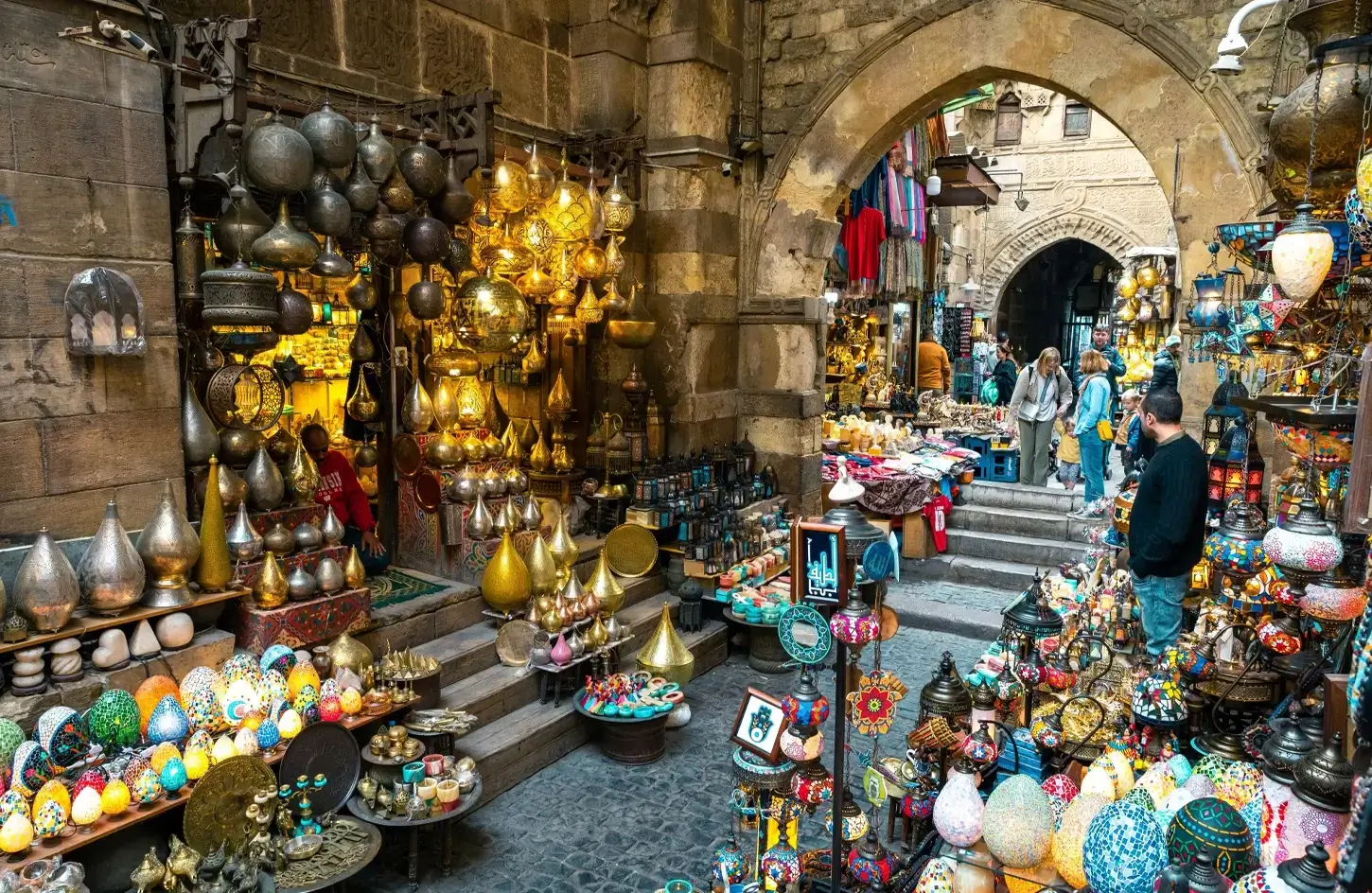
It depends on what you want. For authentic handmade crafts without haggling pressure, Souk al Fustat near Coptic Cairo is the best destination. For the full bazaar experience — gold, spices, copper, perfume — Khan Al-Khalili is unmatched. For international brands in a comfortable setting, Cairo Festival City Mall in New Cairo is the strongest all-round option.
Is Khan Al-Khalili safe for tourists at night?
Yes — the main covered lanes stay busy and well-lit until around 10–11 pm, with tourist police patrolling throughout. The practical risks are persistent vendors and occasional pickpocketing in narrow side alleys, not serious crime. Stick to the main streets, keep valuables in a front bag, and avoid unlit lanes alone after dark.
Is Egyptian cotton worth buying in Cairo — and how do I spot the real thing?
Yes — quality is high, and prices are significantly lower than abroad. Look for “100% Egyptian Cotton” labeling with a thread count of 300–800 for bed linen, and the Gold Seal certification on packaged textiles. Buy from established shops in Wekalet El Balah or Al-Muizz Street rather than tourist souvenir stalls.
What is the biggest shopping mall in Cairo?
Mall of Egypt in 6th of October City, with over 350 stores and 160,000 square meters of retail space. It is also home to Ski Egypt, the only indoor ski resort on the African continent.
Are Cairo malls open on Fridays?
Yes — Friday is one of the busiest shopping days of the week. Most large malls are open 10 am–midnight, with food court areas sometimes open until 1 or 2 am. Friday mornings before noon are the quietest time to visit. Hours extend by one to two hours during Ramadan evenings.
Can I use a credit card for shopping in Cairo?
Cards are widely accepted in malls. In souks and street markets, cash is essential — and vendors will almost always offer a better price for cash, even where card machines exist. Use Banque Misr or CIB ATMs for the best rates, and avoid exchanging currency at hotels.
What are the best souvenirs to buy in Cairo?
Hand-stitched Khayamiya fabric panels, a silver cartouche pendant engraved with your name in hieroglyphics, custom-blended spices and karkade from Souk Al-Attarine, genuine Egyptian essential oils, and authenticated papyrus art. For wearable souvenirs, Egyptian cotton scarves and galabeyas are practical and excellent value. Avoid mass-produced plastic pharaoh figurines — they are not made in Egypt.
Final Note from Nada Safwat
After five years of walking Cairo’s markets every week — often as part of planning Tripianto’s shopping tours, sometimes just because I genuinely enjoy it — the thing I most want visitors to know is this: the best shopping in Cairo is not at the front of any market.
It is 200 meters past the tourist stalls at Khan Al-Khalili, in the copper workshops where a craftsman will let you watch him engrave a tray by hand. It is at Souk Al Khayamiya, where a tentmaker will show you both sides of a wall hanging and explain why the back is where the real skill shows. It is at Souk al Fustat that artisans work in open workshops and are genuinely pleased to have someone take the time to understand what they make.
Cairo rewards the curious shopper and is quite forgiving of the impatient one. But if you slow down, walk past the first stall, and ask questions, you will find things worth carrying home for the rest of your life.
