



Last verified: May 2026
Quick Answer
What are the most famous ancient Egyptian symbols?
The 5 most iconic ancient Egyptian symbols are the Ankh (life & immortality), the Eye of Horus (protection & healing), the Scarab Beetle (rebirth & transformation), the Djed Pillar (stability & resurrection), and the Was Scepter (power & authority). Together they formed the core visual language of ancient Egyptian religion, royalty, and the afterlife.
🔑 Total symbols covered: 40
🏛️ Most seen in temples: Ankh, Cartouche, Was Scepter
⚱️ Most used in tombs: Scarab, Djed, Eye of Horus
👑 Symbol of kingship: Double Crown (Pschent)
⚖️ Symbol of justice: Feather of Ma’at
♾️ Symbol of eternity: Shen Ring
Ancient Egypt is one of history’s most fascinating civilizations, known for its powerful rulers, monumental architecture, and spiritual worldview. At its core lies a rich system of visual communication—ancient Egyptian symbols—used to express ideas about life, death, protection, and the divine. These symbols appeared across tombs, sacred objects, and Ancient Egyptian Temples, carrying meanings far beyond words. Each held unique significance tied to gods, royal traditions, and beliefs about the afterlife. Today, ancient Egypt symbols still inspire art, design, and culture worldwide. In this guide to the 40 most famous ancient Egyptian symbols, you’ll explore their meanings, stories, and lasting legacy.
Ready to see ancient Egyptian symbols come to life? Explore our Egypt travel packages and discover iconic sites like the Giza Plateau and Luxor. Start planning your unforgettable journey today and experience Egypt beyond the packages.
What ancient Egyptians meant by ‘symbol’ – context for non-Egyptologists
Ancient Egyptian symbols are visual representations used by one of the world’s oldest civilizations to express complex ideas, beliefs, and values. These symbols were far more than decorative elements—they served as a powerful language that communicated concepts related to life, death, religion, and the universe. Found on temple walls, tombs, papyrus scrolls, and everyday objects, ancient Egyptian symbols played a central role in shaping how people understood their world and their place within it.
The Role of Symbolism in Ancient Egypt
Symbolism was deeply embedded in every aspect of ancient Egyptian life. Rather than relying solely on written or spoken language, Egyptians used symbols to convey meanings that were often spiritual or abstract. Kings and priests used them to demonstrate authority and divine connection, while ordinary people wore symbolic amulets for protection and good fortune. These symbols acted as a bridge between the physical and spiritual worlds, helping individuals connect with their gods and ensure safety in both life and the afterlife.
Connection Between Symbols and Hieroglyphics
Ancient Egyptian symbols were closely linked to hieroglyphics, the formal writing system used in temples and monuments. Many symbols functioned as both artistic images and written characters, carrying phonetic sounds as well as symbolic meanings. For example, a single symbol could represent a word, an idea, or even a sound depending on its context. This dual purpose made hieroglyphics a unique blend of language and art, where meaning was layered and deeply expressive. Understanding these symbols often required knowledge of both their visual and linguistic significance.
Spiritual and Cultural Significance
The spiritual importance of ancient Egyptian symbols cannot be overstated. Most symbols were tied to religious beliefs and were thought to hold protective or magical powers. They were commonly placed in tombs to guide and protect the deceased in the afterlife, ensuring a safe journey to eternity. Culturally, these symbols reflected the values of balance, harmony, and order that defined ancient Egyptian society. Even today, their meanings continue to captivate people around the world, offering insight into a civilization that viewed symbolism as a vital part of existence.
Ancient Egyptian Symbols Table (40 Symbols)
| Symbol | Meaning | Used In | Museum Location |
|---|---|---|---|
| Ankh | Life, immortality | Amulets, tombs, temple carvings | Egyptian Museum (Cairo), British Museum |
| Eye of Horus | Protection, healing | Jewelry, coffins, amulets | Louvre, British Museum |
| Eye of Ra | Power, destruction | Royal crowns, temple art | Egyptian Museum (Cairo) |
| Scarab Beetle | Rebirth, transformation | Seals, funerary amulets | Metropolitan Museum of Art |
| Djed Pillar | Stability, resurrection | Tomb reliefs, rituals | British Museum |
| Was Scepter | Authority, control | Statues, royal carvings | Louvre Museum |
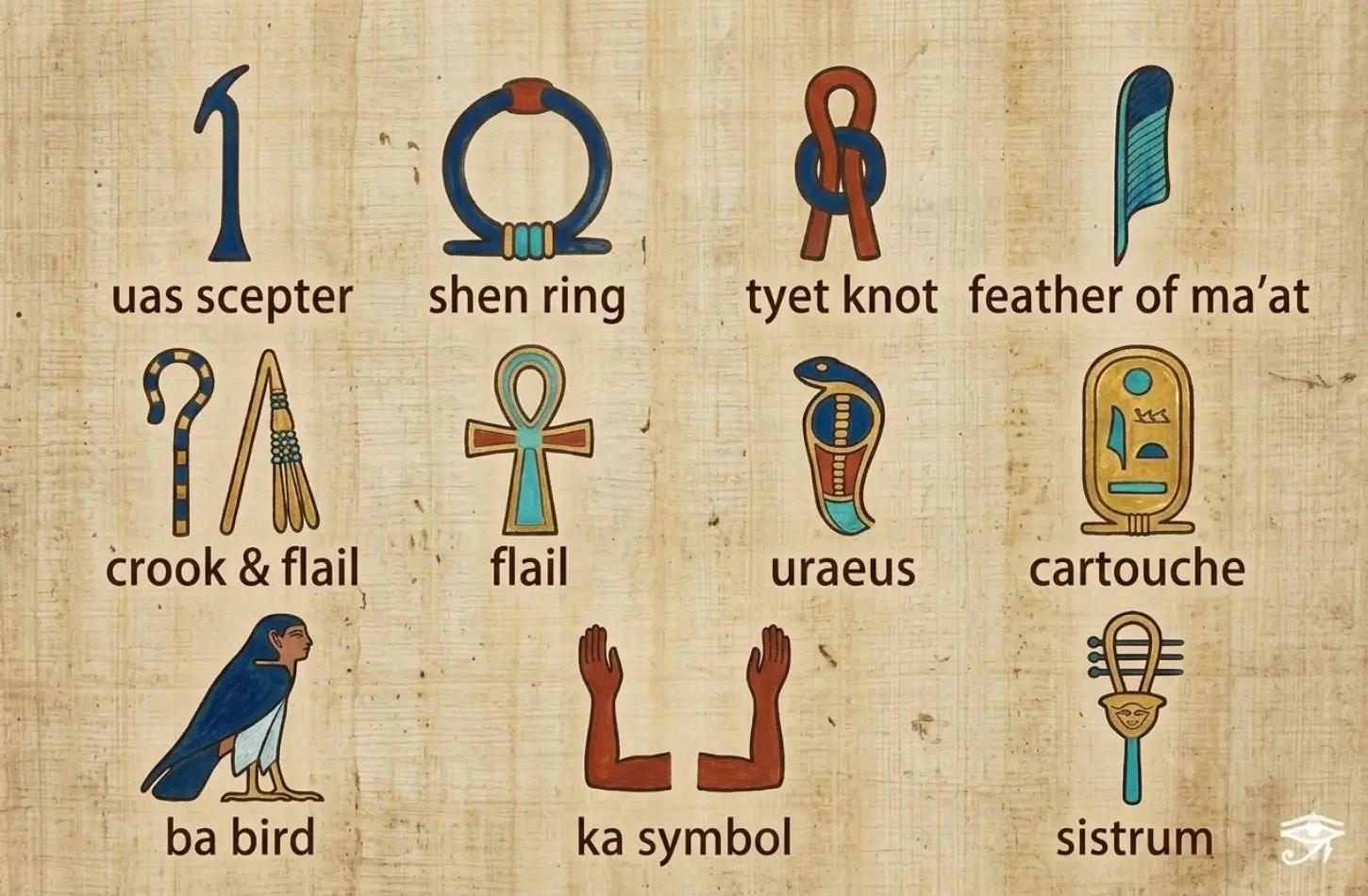
| Shen Ring | Eternity, protection | Cartouches, inscriptions | Egyptian Museum (Cairo) |
| Tyet (Isis Knot) | Protection, feminine power | Burial amulets | British Museum |
| Feather of Ma’at | Truth, justice | Judgment scenes | Louvre Museum |
| Crook and Flail | Kingship, leadership | Pharaoh statues | Egyptian Museum (Cairo) |
| Uraeus | Royal protection | Crowns, statues | Egyptian Museum (Cairo) |
| Cartouche | Name protection | Royal inscriptions | British Museum |
| Ba | Soul personality | Tomb paintings | Egyptian Museum (Cairo) |
| Ka | Life force | Funerary offerings | Egyptian Museum (Cairo) |
| Sistrum | Music, protection | Temple rituals | Louvre Museum |
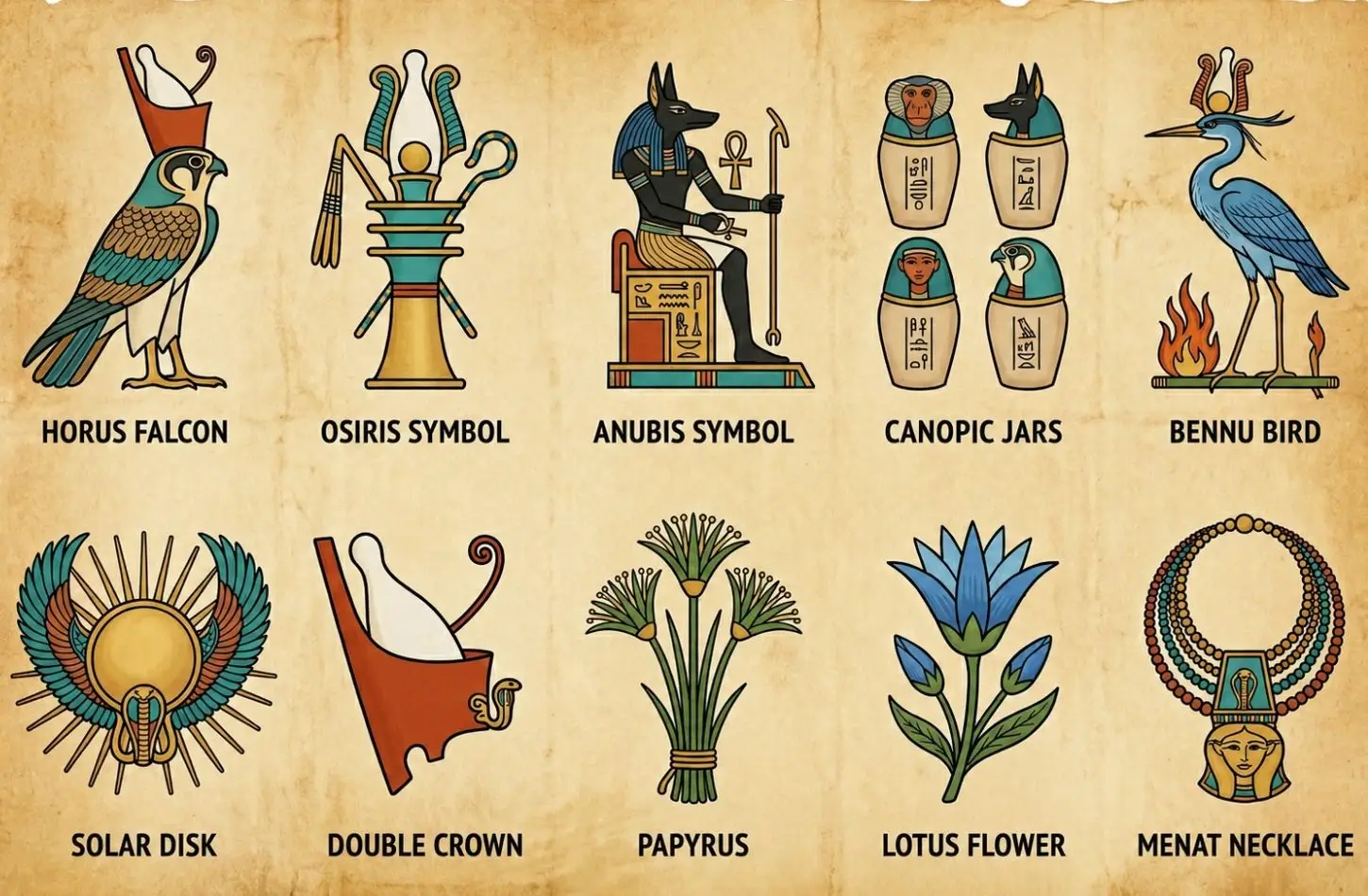
| Menat Necklace | Joy, fertility | Ritual ceremonies | British Museum |
| Lotus Flower | Rebirth, creation | Temple art, jewelry | Egyptian Museum (Cairo) |
| Papyrus | Knowledge, Lower Egypt | Scrolls, writing material | British Museum |
| Double Crown | Unified Egypt | Royal regalia | Egyptian Museum (Cairo) |
| Solar Disk | Sun, divine energy | Temple carvings | Louvre Museum |
| Bennu Bird | Rebirth, creation | Mythological texts | Egyptian Museum (Cairo) |
| Canopic Jars | Organ protection | Mummification burials | Egyptian Museum (Cairo) |
| Anubis Symbol | Mummification, protection | Tomb scenes | British Museum |
| Osiris Symbol | Afterlife, resurrection | Funerary art | Louvre Museum |
| Horus Falcon | Kingship, sky | Temple carvings | Egyptian Museum (Cairo) |
| Sekhmet Symbol | War, healing | Statues, temples | Egyptian Museum (Cairo) |
| Hathor Symbol | Love, joy | Temples, jewelry | Dendera Temple Museum |
| Thoth Symbol | Wisdom, writing | Papyri, inscriptions | British Museum |
| Amenta | Underworld | Tomb texts | Egyptian Museum (Cairo) |
| Seba (Star) | Guidance, soul journey | Tomb ceilings | Louvre Museum |
| Tjet | Protection, Isis magic | Burial amulets | British Museum |
| Nefer | Beauty, perfection | Names, inscriptions | Egyptian Museum (Cairo) |
| Akhet | Horizon, rebirth | Pyramid alignment art | Giza Plateau |
| Deshret Crown | Lower Egypt | Royal crowns | Egyptian Museum (Cairo) |
| Hedjet Crown | Upper Egypt | Pharaoh regalia | Egyptian Museum (Cairo) |
| Atef Crown | Osiris authority | Funerary art | British Museum |
| Khepresh Crown | War crown | Battle depictions | Egyptian Museum (Cairo) |
| Winged Sun Disk | Protection, divinity | Temple entrances | Edfu Temple |
| Set Animal | Chaos, desert forces | Mythological carvings | Egyptian Museum (Cairo) |
| Ladder of Heaven | Soul ascent | Pyramid Texts | Saqqara Pyramid Complex |
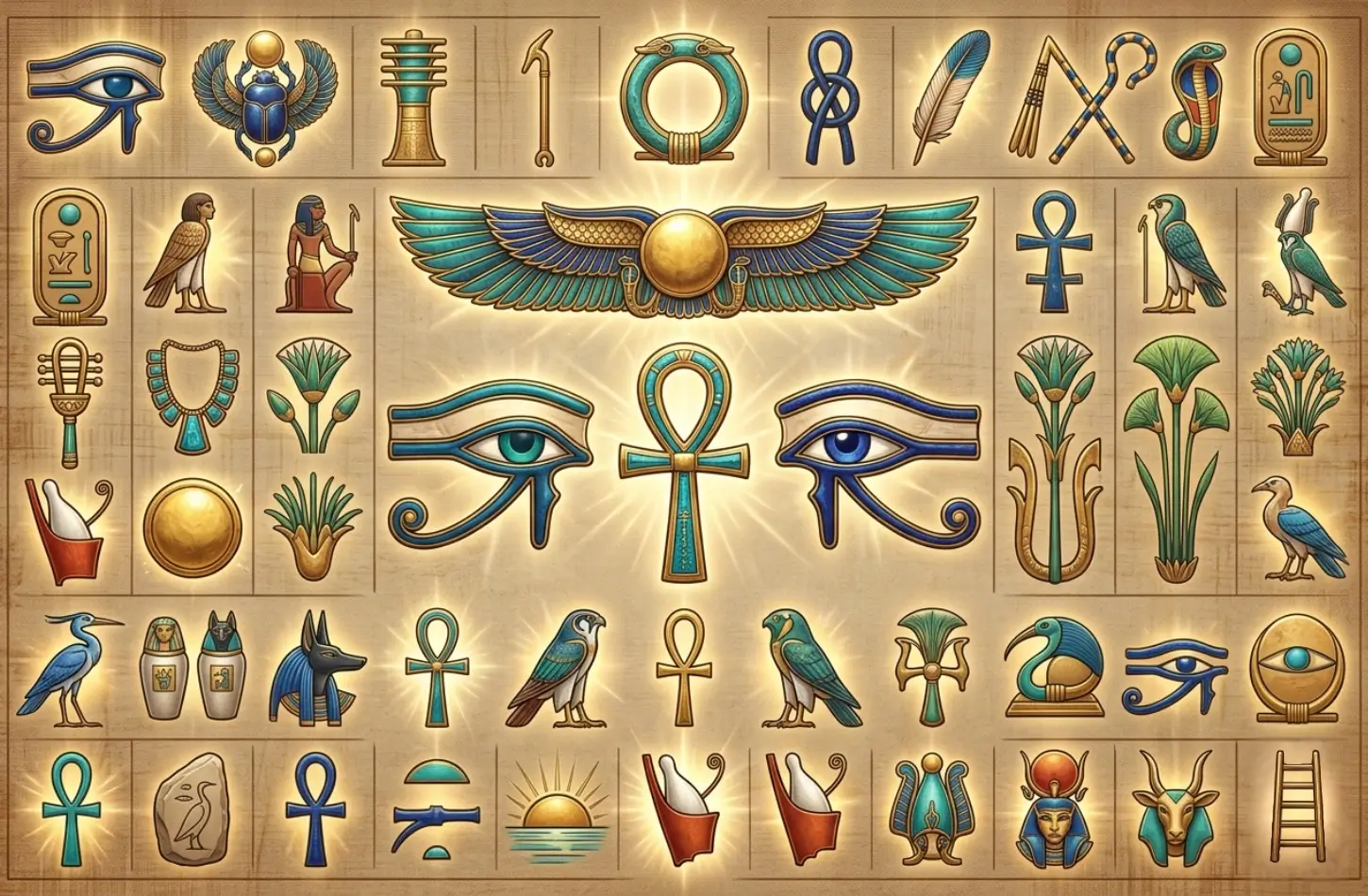
The 40 Most Famous Ancient Egyptian Symbols
1. Ankh (Symbol of Life)
The Ankh is a powerful ancient Egyptian symbol of life representing immortality, divine energy, and eternal life. Gods such as Osiris, Isis, and Ra are often depicted holding it. It appears in temples, tombs, and amulets across Egypt, reflecting deep spiritual beliefs and the ancient Egyptian concept of life after death.
2. Eye of Horus (Protection and Healing)
The Eye of Horus is an ancient Egyptian symbol of protection, healing, and restoration. In myth, Horus lost his eye in battle with Seth, and Thoth restored it, symbolizing wholeness. It appears in amulets, tombs, and jewelry, protecting people in life and the afterlife, representing balance and healing in ancient Egypt.
The Eye of Horus appears engraved across the walls of Karnak and Luxor Temples — if you want to stand face-to-face with it, our Luxor tours take you straight to these temple complexes with an expert Egyptologist.
3. Eye of Ra (Power and Authority)
The Eye of Ra represents divine power, destruction, and protection linked to Ra, the sun god. Often shown as Sekhmet, it punishes humanity. Found in temples and royal art, it symbolizes authority. Unlike the Eye of Horus, it shows aggressive protection, control, and cosmic balance in ancient Egyptian symbols.
4. Scarab Beetle (Rebirth)
The scarab is a key Egyptian symbol of rebirth and transformation. Linked to the sun god Khepri, it represents the sun’s daily rebirth. Scarabs were placed in tombs as protective amulets and used in mummification rituals. It is one of the most common Egyptian symbols and meanings found in archaeology. Scarabs were also used as seals for official documents.
Scarab amulets by the thousands were found inside the Valley of the Kings — you can discover them on our Egypt classic tours, which cover Cairo, Luxor, and Aswan in one journey.
16. Menat Necklace (Joy and Fertility)
The Menat necklace is a sacred ancient Egyptian symbol linked to Hathor, representing joy, fertility, protection, and divine blessings. Used in rituals, it was shaken to bring happiness and spiritual energy. Often shown in temple scenes, it symbolizes music, dance, and divine favor, believed to transmit protective, life-giving power.
17. Lotus Flower (Rebirth and Creation)
The lotus flower is an ancient Egyptian symbol of rebirth, creation, and the rising sun. It closes at night and blooms in the morning, representing renewal. Myth says Ra emerged from a lotus at creation. Found in tombs and temples, it symbolizes purity, spiritual awakening, and the cycle of life and death.
18. Papyrus (Knowledge and Lower Egypt)
Papyrus is an ancient Egyptian symbol of knowledge, writing, and the fertility of Lower Egypt. Used to make early paper, it preserved history, religion, and administration. Often shown with a lotus, it symbolizes the unity of Upper and Lower Egypt and renewal along the Nile, while papyrus scrolls stored sacred spells and historical records.
19. Double Crown (Unity of Egypt)
The Double Crown, or Pschent, symbolizes the unification of Upper and Lower Egypt. Combining the red and white crowns, it represents political power, unity, authority, and divine kingship. Pharaohs wearing it ruled the entire land, reflecting balance and their sacred role under the protection of the gods in ancient Egyptian belief.
20. Solar Disk (Sun and Divine Energy)
The Solar Disk is an ancient Egyptian symbol of the sun, creation, and divine energy linked to Ra. It represents life, warmth, and cosmic order as Ra travels the sky in his solar boat. Seen above are gods like Ra, Amun-Ra, and Horus, who symbolize the source of all life and power.
21. Bennu Bird (Rebirth and Creation)
The Bennu bird is an ancient Egyptian symbol of rebirth, creation, and eternal cycles, later inspiring the phoenix myth. Linked to Ra and Atum, it represents creation emerging from chaos. Often shown as a heron-like bird near the sun or sacred stone, it symbolizes transformation, renewal, and eternal life.
22. Canopic Jars (Protection of Organs)
Canopic jars are funerary containers used in mummification to preserve organs, central to ancient Egyptian afterlife beliefs. Each jar protected a specific organ and was guarded by the Four Sons of Horus. Found in tombs, they symbolize preservation, resurrection, and bodily wholeness, ensuring the deceased could be reborn intact in the afterlife.
23. Anubis Symbol (Mummification and Protection)
Anubis is an ancient Egyptian god symbolizing mummification, embalming, and the protection of the dead. Depicted as a jackal or jackal-headed man, he guards tombs and guides souls in the afterlife. He oversees the Weighing of the Heart, ensuring justice. He represents safe passage, judgment, and spiritual transition after death.
24. Osiris Symbol (Resurrection and Afterlife)
Osiris is a central ancient Egyptian god symbolizing resurrection, fertility, and eternal life. He was the first pharaoh and ruler of the underworld after being killed by Set and revived by Isis. His green skin represents rebirth and nature. He embodies justice and hope for the afterlife, often shown with a crook and a flail.
25. Horus Falcon (Kingship and Sky Power)
Horus, depicted as a falcon, is an ancient Egyptian god of kingship, protection, and the sky. Son of Isis and Osiris, he represents the rightful ruler of Egypt, with pharaohs seen as the “Earthly Horus.” He symbolizes vision, power, order, victory over chaos, and royal legitimacy in ancient Egyptian belief.
26. Sekhmet Symbol (War and Healing)
Sekhmet is a powerful ancient Egyptian goddess symbolizing war, destruction, healing, and divine protection. Depicted as a lioness or lioness-headed woman, she was sent by Ra to punish humanity but was calmed after drinking red beer. She represents both destruction and healing, protecting Egypt from disease, enemies, and chaos.
27. Hathor Symbol (Love and Joy)
Hathor is an ancient Egyptian goddess of love, music, beauty, fertility, and motherhood. Depicted as a cow or woman with cow horns and a sun disk, she symbolizes joy and protection. She guides souls to the afterlife and is linked to celebration, dance, and emotional balance in Egyptian mythology.
28. Thoth Symbol (Wisdom and Writing)
Thoth is the ancient Egyptian god of wisdom, writing, knowledge, and magic. Depicted as an ibis-headed man or baboon, he is credited with creating hieroglyphs. He served as divine scribe in the Weighing of the Heart, recording judgments. He symbolizes intelligence, learning, writing, and maintaining cosmic order and balance.
29. Amenta (Land of the Dead)
Amenta is the ancient Egyptian underworld symbol linked to the west, where the sun sets, representing death and transition. Souls travel through Amenta for judgment and rebirth in the afterlife. It symbolizes the soul’s journey and spiritual transformation, often depicted in tomb art with gates, paths, and guardians.
30. Bennu Stone (Star of Renewal)
The Bennu Stone is linked to the Bennu bird and symbolizes renewal, cosmic cycles, and rebirth in ancient Egyptian belief. Connected to creation myths from primordial chaos and sacred sites like Heliopolis, it represents eternal cycles where destruction leads to rebirth and later inspired the phoenix legend.
31. Tjet (Blood of Isis)
The Tjet, or Knot of Isis, is an ancient Egyptian symbol of protection, healing, magic, and feminine power. Linked to Isis, it represents her life-giving magic and protection of Osiris. Often placed in tombs and jewelry, it ensured safe passage to the afterlife, symbolizing regeneration, motherhood, and divine protection.
32. Nefer Symbol (Beauty and Perfection)
The Nefer symbol represents beauty, harmony, and perfection in ancient Egyptian belief. It is linked to balance and ideal form in physical and spiritual life. Found in royal names like Nefertiti, it reflects beauty as moral goodness and cosmic order. It was used for gods, queens, and sacred offerings in Egypt.
33. Akhet (Horizon and Rebirth)
Akhet represents the horizon where the sun rises and sets, symbolizing rebirth and renewal in ancient Egyptian belief. Linked to Ra’s solar journey, it appears as two mountains with the sun between them, marking life, death, and rebirth. It represents transformation, eternal cycles, and is associated with the Great Pyramid’s alignment.
34. Deshret Crown (Lower Egypt Power)
The Deshret, or Red Crown, represents Lower Egypt and symbolizes political authority and control over the Nile Delta. Worn by northern rulers before unification, it later became part of the Double Crown. It signifies leadership, divine rule, and the importance of uniting Egypt under one king in ancient Egyptian civilization.
35. Hedjet Crown (Upper Egypt Power)
The Hedjet, or White Crown, represents Upper Egypt and symbolizes kingship, authority, and divine rule over the south. It reflects purity, strength, and leadership in ancient Egyptian belief. Later combined with the Deshret to form the Double Crown, it signifies Egypt’s unification under one pharaoh and is linked to Horus and early kings.
36. Atef Crown (Osiris and Divine Authority)
The Atef crown is an ancient Egyptian symbol linked to Osiris, representing resurrection, divine kingship, truth, and balance. It combines the White Crown of Upper Egypt with ostrich feathers, symbolizing authority over the underworld and eternal life. Often shown in funerary art, it reflects spiritual and moral power.
37. Khepresh (Blue War Crown)
The Khepresh, or Blue Crown, is a royal headdress worn by pharaohs in battle and ceremonies. It symbolizes military power, protection, and divine authority in warfare. It represents the pharaoh as a warrior-king chosen by the gods and appears in temple scenes of conquest, showing active leadership and strength in conflict.
38. Winged Sun Disk (Protection and Divinity)
The Winged Sun Disk is an ancient Egyptian symbol of divine protection, eternal power, and cosmic balance. Linked to Ra and Horus, its wings represent protection over the land while the sun disk symbolizes life and creation. It appears on temples and royal inscriptions, showing divine approval of pharaohs and harmony.
The Winged Sun Disc guards the entrance of almost every major Egyptian temple — experience it above the gates of Karnak and Edfu on our luxury Egypt tours with private Egyptologist guides.
39. Was Animal Head (Chaos and Desert Forces)
The Was Animal Head is associated with Set, the god of chaos, storms, and desert destruction. It represents disorder, strength, and natural forces. Set is both feared and respected for balancing chaos and order. The mysterious animal head symbolizes unknown forces and appears in temple scenes of Set protecting Ra in the underworld.
40. Ladder of Heaven (Ascent to the Divine)
The Ladder of Heaven is an ancient Egyptian symbol of the soul’s ascent from earth to the divine realm. It represents spiritual growth, eternity, and transformation. Mentioned in the Pyramid Texts, it describes pharaohs climbing to join Ra in the sky. It reflects beliefs in the afterlife, cosmic order, and spiritual evolution.
Ahmed, Egyptologist at Tripianto: On any temple visit, start by scanning at eye level and doorway height — these are where the most readable symbols appear. Ceilings are for the afterlife; walls at eye level are for the living.
The 10 Most Common Symbols on Temple Walls (And What to Look For)
Knowing 40 symbols before a trip is impressive. But when you’re standing inside Karnak at 7 am, your guide is pointing at a wall 20 metres wide, and every inch is carved — knowing which symbols repeat most often is what helps you read a temple like a sentence.
Here are the ten you’ll encounter again and again, at nearly every major site from Abu Simbel to Alexandria.
- Ankh — The One Shaped Like a Cross With a Loop: It appears in almost every offering scene. Gods extend it toward the pharaoh’s nose — the act of literally breathing life into him. At Luxor Temple and Karnak, look for it held in the left hand of Amun, Mut, and Khonsu. It never appears alone — it’s always in a hand.
- Winged Sun Disk — The Symbol Above Every Doorway: Before you enter any temple chamber, look up. The horizontal beam above the door almost always carries a sun disk with outstretched falcon wings. At Edfu Temple, it’s carved in exceptional detail. It marks the transition from the outside world into sacred space — a visual declaration that this place is under divine protection.
- Cartouche — The Oval That Holds a Name: You’ll see oval frames everywhere: on columns, on ceilings, on the feet of statues. Each one contains a royal name in hieroglyphs. Ramesses II is the most commonly spotted name in Egypt — he built or co-opted more monuments than any other pharaoh. Spot his cartouche at Abu Simbel, the Ramesseum, Karnak, and Luxor Temple.
- Uraeus — The Cobra on Every Crown: The rearing cobra on a pharaoh’s forehead is one of the most reproduced symbols in Egyptian art. On painted reliefs, it’s gold on the white or blue crown. On the forehead, it projects forward from the brow. At the Egyptian Museum in Cairo, the gold mask of Tutankhamun shows it most clearly alongside the vulture head of Nekhbet — together they represent dominion over all Egypt.
- Was Scepter — The Staff With the Strange Animal Head: Tall, thin, with a forked base and an unidentifiable animal head at the top. Gods carry it constantly in wall carvings, always in the right hand. You’ll see it hundreds of times at Karnak’s Hypostyle Hall. It represents authority over chaos — the right to rule all forces of nature.
- Djed Pillar — The Symbol That Looks Like a Spine: Painted on the ceilings of burial chambers and on the inner walls of the deepest sanctuaries, the Djed is Osiris’s backbone — a symbol of endurance and resurrection. At Abydos (the Temple of Seti I), it appears in extraordinary painted detail. It’s also commonly found on the inside of coffin lids.
- Feather of Ma’at — The Single Ostrich Feather: Painted in judgment scenes, typically on papyrus or tomb walls rather than carved temple exteriors. Look for the Weighing of the Heart scene: on one side of the scales sits a human heart; on the other sits this feather. If the heart is heavier, the soul is devoured. You’ll find the most famous version in the Book of the Dead papyri at the Egyptian Museum.
- Eye of Horus (Wedjat) — The Stylised Eye With the Curved Tail: Temple columns, tomb ceilings, and outer walls all feature it. The curved line beneath the eye mimics the markings of a peregrine falcon — the eye of a god who sees everything. At Dendera Temple, the astronomical ceiling is surrounded by rows of Wedjat eyes. Fishermen still paint it on the prows of their boats today.
- Lotus and Papyrus — The Plants That Unite Egypt: In processional scenes and on column capitals, you’ll constantly see two plants twisted together: the lotus (representing Upper Egypt and rebirth) and the papyrus (representing Lower Egypt and the Nile). This “sema tawy” motif — the binding of the two lands — appears on throne bases, on the sides of altars, and along the lower registers of nearly every ceremonial wall.
- Solar Disk of Ra — The Circle With Rays: Usually shown above the head of a god or pharaoh, often with a Uraeus coiled around it. In outdoor temples like Abu Simbel and Medinet Habu, the alignment of doorways means actual sunlight strikes the inner sanctuary twice a year — the building itself becomes a solar symbol. At sunrise in these temples, the disk painted on the sanctuary ceiling is briefly illuminated by the real sun behind you.
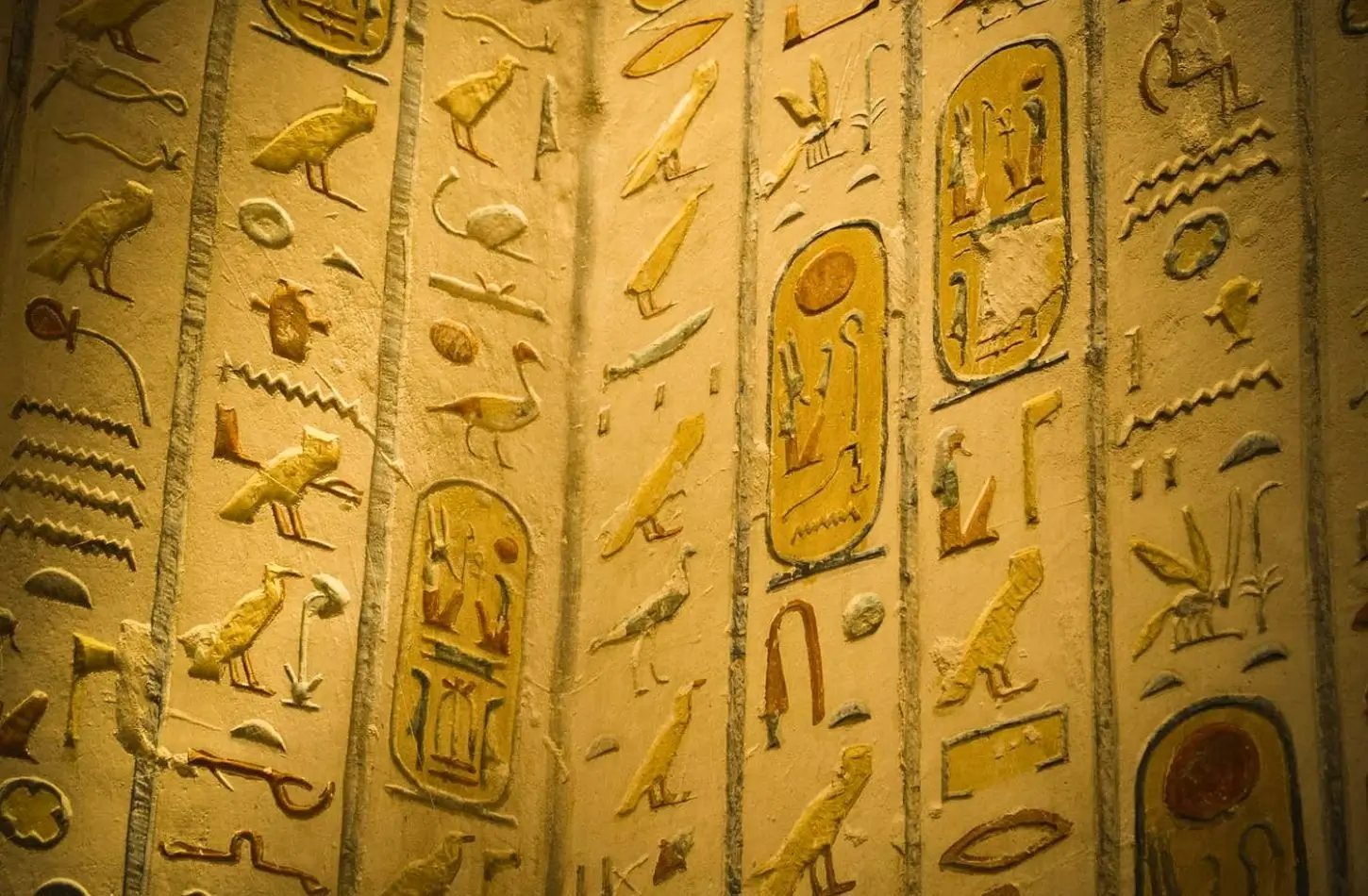
How Symbols Evolved Across the Old, Middle, and New Kingdoms
Egyptian art looks consistent from the outside — and that’s largely the point. Stability was a spiritual value, not just an aesthetic one. But spend time with the symbols across three thousand years of temples and tombs, and a clear pattern of evolution emerges.
Old Kingdom (c. 2686–2181 BC): Symbols as Pure Function. The earliest period of major monument-building. Symbols here are simple, unambiguous, and built for permanence. The Djed pillar, the Ankh, and the Was scepter appear in their most stripped-back form — carved deep into limestone, painted in flat earth tones. The purpose was durability, not beauty. These symbols needed to last forever, because forever was exactly what they were protecting. The Pyramid Texts of Unas (c. 2375 BC) at Saqqara are the oldest religious texts in the world and show hieroglyphic symbols carved with almost geometric precision. There is no ornamentation — only meaning.
Middle Kingdom (c. 2055–1650 BC): Symbols Become Personal. After a period of political collapse, the Middle Kingdom saw symbols move beyond temples and royal tombs and into everyday life. Amulets featuring the Tyet (Knot of Isis), the Djed, and scarab beetles became common burial items for non-royal Egyptians. This is the period when symbolism democratised — you no longer needed to be a pharaoh to be protected by the gods. The art becomes more naturalistic; human figures show more individuality. The Eye of Horus begins appearing on coffin sides — the “Coffin Texts” let ordinary people access the same afterlife protections once reserved for kings.
New Kingdom (c. 1550–1070 BC): Symbols at Full Spectacle. This is the Egypt most visitors see. The temples at Karnak, Luxor, Abydos, Abu Simbel, and the Valley of the Kings all date to this period. Symbolism becomes theatrical. Painted walls are multi-layered: lower registers show earthly offerings; middle registers show royal ceremonies; upper registers and ceilings show the cosmos. The Winged Sun Disk, cartouches, and the Feather of Ma’at are carved at monumental scale. The Amun-Ra solar theology absorbs older symbols — the solar disk begins appearing above the heads of dozens of different gods, not just Ra. Ramesses II, who reigned for 66 years, added his cartouche to more existing monuments than he built new ones. This period also introduces the most complex form of the Book of the Dead, with detailed judgment scenes that are essentially illustrated moral philosophy.
The shift across all three periods follows a single arc: from royal to universal, from austere to ornate, from the protection of the body to the guidance of the soul.
Symbols on Amulets: What You’ll See in Souvenir Shops vs. Museum Originals
Every market in Egypt — Khan el-Khalili in Cairo, the bazaars in Luxor, the stalls outside the Valley of the Kings — sells amulets. Ankh pendants, scarabs in every size, Eye of Horus keyrings. They’re everywhere, and they should be: they’re a direct continuation of something Egyptians have been doing for four thousand years.
But there’s a meaningful difference between what you’ll find on a souvenir stall and what sits in a museum vitrine. Understanding that difference makes both more interesting.
What the originals actually look like. Museum amulets from the New Kingdom are almost always small — the average scarab fits on a thumbnail. They were made from faience (a blue-green glazed quartz compound), carnelian, lapis lazuli, gold, or hardstone. The craftsmanship is extraordinary under magnification: fine details on scarab legs, hieroglyphs carved into the underside of the base, inlaid eyes on Wedjat amulets. The Egyptian Museum in Cairo has cases dedicated to amulet collections from single tomb finds — hundreds of objects, each with a specific protective purpose tied to a specific body part or moment in the afterlife journey. The Tyet amulet, for example, was always placed at the neck. The Djed pillar at the spine. The Heart Scarab over the chest, directly above the organ it was there to protect during the Weighing of the Heart ceremony.
What sells in the market? Modern souvenir amulets are almost entirely focused on five symbols: the Ankh, the Eye of Horus, the scarab, the Cartouche (often personalised with a name), and occasionally the Djed pillar. They’re cast in silver or gold-plated metal, resin, or painted stone. The proportions are often exaggerated for visibility — where an original scarab might be 1.5cm long, the souvenir version is 4cm. The symbolism is broadly accurate; the craft is different.
The symbols that don’t make it to market. Almost none of the more complex amulets appear in tourist shops. You won’t find the Was scepter miniature, the Feather of Ma’at, or the Tyet knot in most markets — these aren’t visually recognizable enough to sell without explanation. The Ba bird (human-headed) does appear occasionally, but rarely. The Nefer symbol and the Bennu bird are rarely seen. This means that if you want to understand the full symbolic vocabulary of ancient Egypt, the souvenir market will give you the greatest hits — the museum is where you find the rest.
A practical note for travelers: If you want to buy an amulet that reflects how Egyptians actually used them, consider the amulet’s original function. A Heart Scarab was about judgment and truth. A Tyet was about protection and Isis’s power. A Wedjat was about healing and restoration. Buying one because you understand what it meant — and what it was placed on or near in a burial — is a different experience than buying a keyring. Both are valid. One connects you more directly to the civilization that invented it.
Want to see authentic amulets in context before the market? Our Cairo tours include time at the Egyptian Museum’s amulet collections, where an Egyptologist can walk you through what each piece was actually for.
Summary: Where to Insert Each Section
| Section | SectionInsert Location | SectionReason |
|---|---|---|
| 10 Symbols on Temple Walls | Before “Why Ancient Egyptian Symbols Were Important” | Provides practical depth after the 40-symbol list; strong for “Egypt temple wall symbols” search intent |
| Symbols Across Old/Middle/New Kingdom | Directly after Section 1 | Adds historical authority; targets long-tail keywords like “how did Egyptian symbols change over time.” |
| Amulets: Souvenir vs. Museum | Directly after Section 2 | Connects to buying intent and museum visits; targets “Egyptian amulet meaning” and “Egyptian souvenir symbols” searches |
Why Ancient Egyptian Symbols Were Important
Ancient Egyptian symbols were central to religion, mythology, and daily life. They were not just decorative but represented divine powers, creation stories, and cosmic balance. Symbols like the Ankh, Eye of Horus, and Solar Disk helped explain life, death, and rebirth, connecting people to the gods. In tombs and temples, Egyptian symbols and meanings were carved into walls to guide and protect souls in the afterlife. These symbols of Egypt also displayed royal power and spiritual beliefs. Many were used as amulets, believed to hold magical protection against evil, making ancient Egyptian symbols essential to both spiritual and everyday life.
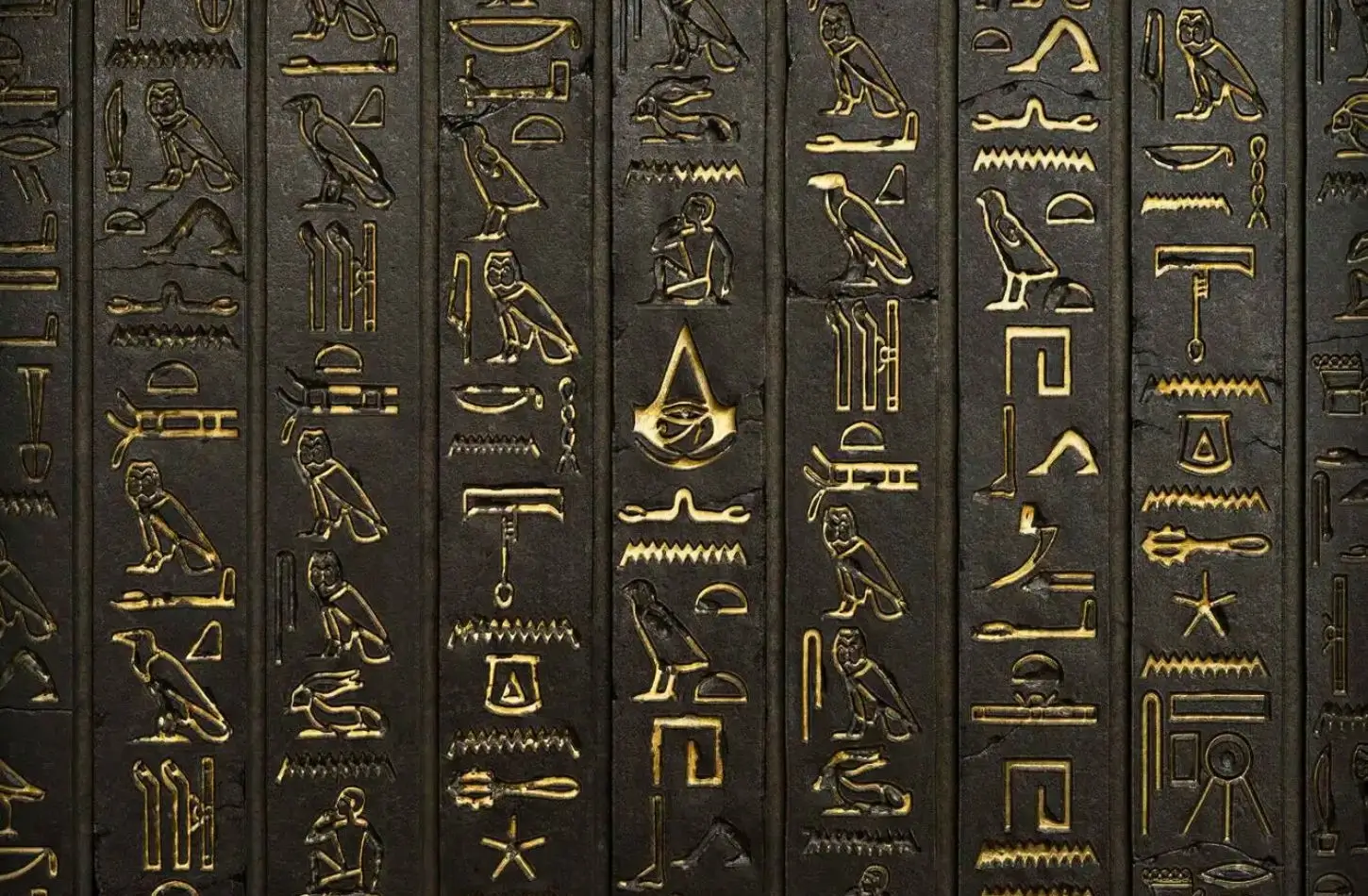
Ancient Egyptian Symbols in Modern Culture
Ancient Egyptian symbols continue to influence modern culture in art, fashion, and spirituality. Designs like the Ankh, Eye of Horus, and scarab appear in jewelry, tattoos, and home décor, reflecting their timeless appeal. Many people are drawn to the deeper Egyptian symbols and meanings, using them for protection, balance, or personal expression. In media, films, and video games, these symbols of Egypt are often used to represent mystery, power, and ancient knowledge. Today, ancient egypt symbols remain relevant, connecting the modern world with one of history’s most fascinating civilizations and preserving its cultural and spiritual legacy.
FAQs About Ancient Egyptian Symbols
What is the most famous ancient Egyptian symbol?
The Ankh is widely considered the most famous ancient Egyptian symbol, and for good reason — it appears more consistently across more time periods, materials, and contexts than any other. You’ll find it on temple walls from the Old Kingdom through the Ptolemaic period, on amulets worn by royalty and commoners alike, on the handles of bronze mirrors, and in the hands of nearly every major deity in the Egyptian pantheon. The Eye of Horus runs a close second and is arguably more recognized in modern popular culture, but the Ankh’s dominance in ancient Egypt itself is hard to overstate. If you only learn one symbol before visiting Egypt, make it this one — you’ll see it hundreds of times.
What does the ankh symbol really mean?
The Ankh means life — but not life in the narrow biological sense. In ancient Egyptian belief, it represented the entire cycle: physical existence, divine energy, and the soul’s continuation after death. The loop at the top is thought to represent the sun rising over the horizon, while the cross below represents the earth and the path of the sun across it. Gods are almost always shown holding the Ankh by the loop, and when they extend it toward a pharaoh’s nostrils in offering scenes, they are literally breathing eternal life into him. It was also connected to water — the source of all life along the Nile — and appears in the hieroglyphic phrase ankh, udja, seneb, meaning “life, prosperity, and health,” the standard royal blessing. Today, it’s widely used in jewellery and tattoos, often as a general symbol of protection or spirituality, which is close enough to its original meaning to be fair.
What is the Eye of Horus a symbol of?
The Eye of Horus — known in ancient Egypt as the Wedjat, meaning “the whole one” — is a symbol of protection, healing, and restoration. The myth behind it matters: Horus lost his eye in battle with Set, the god of chaos, while avenging his father, Osiris, who was murdered. The god Thoth then completely restored the eye, and that act of healing is exactly what the symbol encodes. The six parts of the Wedjat were also used in ancient Egyptian mathematics to represent fractions of the heqat (a unit of grain measurement), which tells you something about how deeply this symbol was woven into daily life — not just religious ritual. In tombs and on coffins, it was painted on the left side of the outer case so the deceased could look out through it. On fishing boats, it was painted on the prow so the vessel could “see” its way safely. It is not the same as the Eye of Ra, which represents destructive power rather than healing — a distinction worth knowing before your temple visit.
Are scarabs religious symbols?
Yes — and one of the most layered ones in the entire Egyptian system. The scarab beetle (specifically the dung beetle Scarabaeus sacer) was observed rolling balls of dung across the desert floor, and Egyptian priests saw in that motion a mirror of the sun god Khepri pushing the solar disk across the sky each morning. From that observation came an entire theology: the scarab represented the sun’s daily rebirth, transformation, and the renewal of life from apparent decay. In practice, this meant scarab amulets were placed in tombs by the millions — the Egyptian Museum in Cairo holds more than any other single object type. The most important was the Heart Scarab, a larger stone version placed directly over the heart of a mummy, inscribed with a spell from the Book of the Dead instructing the heart not to testify against its owner during the Weighing of the Heart judgment. Scarabs were also used as administrative seals, diplomatic gifts between kingdoms, and commemorative objects — Amenhotep III issued large commemorative scarabs to mark events like his marriage and a lion hunt. Religious, yes. But also political, personal, and commercial, all at once.
Where can I see authentic Egyptian symbols today?
In Egypt, the two best starting points are the Egyptian Museum in Cairo and the temple complex at Karnak in Luxor. The Egyptian Museum holds the densest collection of symbolic objects in the world — amulets, canopic jars, painted coffins, papyri, and royal regalia all in one building. Karnak gives you symbols at an architectural scale: the Hypostyle Hall alone has 134 columns, covered floor to ceiling with carved and painted hieroglyphs. For funerary symbolism specifically, the Valley of the Kings near Luxor contains tombs in which the entire Book of the Dead is painted across walls and ceilings in extraordinary color. The Temple of Edfu (dedicated to Horus) is the best-preserved temple in Egypt and carries one of the finest examples of the Winged Sun Disk above its entrance. Abydos (Temple of Seti I) is less visited but contains some of the most detailed painted reliefs in the country, including a complete list of pharaohs that rewrote what historians knew about the royal succession. Outside Egypt, the British Museum in London, the Louver in Paris, and the Metropolitan Museum of Art in New York all hold major collections. But symbols were designed to be read in context — on the walls of the buildings they were made for. There is no real substitute for being inside a temple.
Conclusion
Ancient Egyptian symbols offer a powerful window into one of history’s most fascinating civilizations. From representing life, protection, and divine power to guiding souls in the afterlife, these symbols were deeply woven into every aspect of Egyptian culture. They helped people understand complex ideas about the universe, the gods, and human existence.
Today, the timeless legacy of ancient Egyptian symbols continues to inspire art, design, and modern spirituality. Their meanings remain relevant, reminding us of the enduring human desire to find connection, purpose, and balance. By exploring these symbols, we not only learn about ancient Egypt but also appreciate how its influence still shapes our world.
