


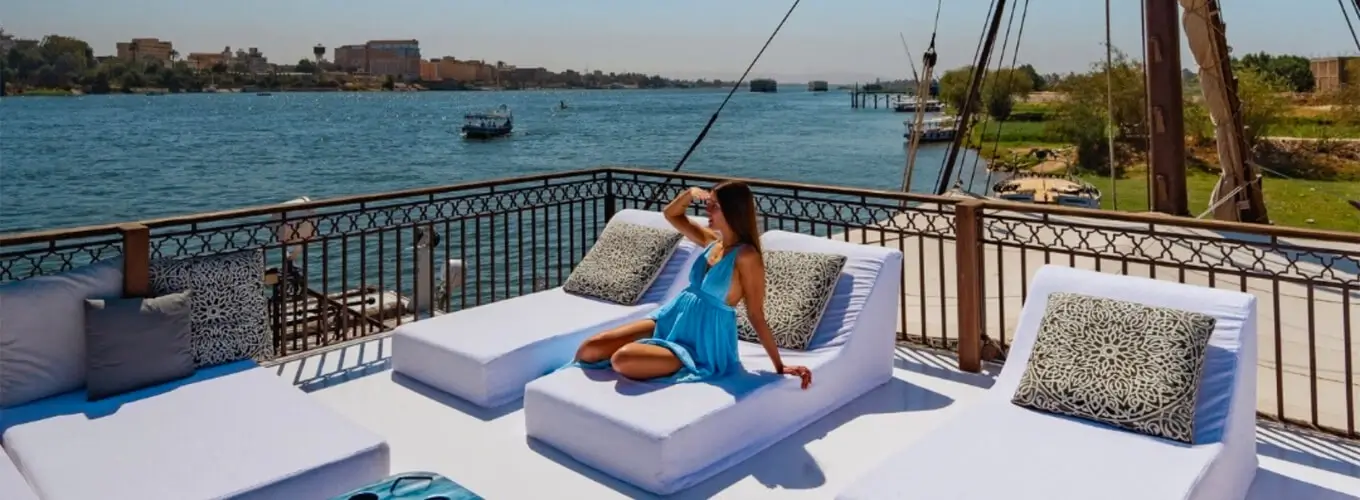
Last verified: May 2026
Quick Answer
🚢 Is a Nile Cruise worth it in 2026?
Yes — for most first-time visitors.from$500/personfor 3–4 nights, it bundles meals, Egyptologist guide, temple entry fees & transfers into one price — far cheaper than booking separately.
✅ Includes
Full-board · licensed guide · Karnak, Valley of the Kings, Edfu, Kom Ombo Philae
❌ Extra costs:
Drinks · tips ($5–10/day) · flights to Luxor or Aswan
💰 Standard
$500+ · Deluxe: $800–$1,400 · Luxury: $2,000+/person
👍 Worth it if
First visit · want hassle-free temples · couples or families
Is a Nile Cruise Worth It? Costs, Tips & Honest Pros & Cons. A standard Nile cruise costs from $500 per person for three to four nights, covering accommodation, all meals, guided excursions, and entry fees to the major temples between Luxor and Aswan. For most first-time visitors to Egypt, it is genuinely worth it — but not for everyone. This guide gives you the honest picture: what you actually get, where the money goes, and when you are better off skipping it.
This question was posed to me more often than I can remember, typically by a person who has three separate cruise options up on their computer and wonders if this all isn’t just a fancy version of a tourist factory line.
Here is the short, honest response: It depends on which cruise you choose, who the passenger is, and whether they understand exactly what they are getting themselves into. Having spent five years designing Nile cruises myself, I can give you a clear understanding of what your money buys and where its limitations lie.
This article is far from a travel brochure; it will also make you aware of when a Nile cruise might not be the best choice for you.
Is a Nile cruise worth it? The short answer is yes.
For most first-time visitors to Egypt, a Nile cruise is worth every penny. The stretch of the river between Luxor and Aswan boasts the largest concentration of ancient monuments in the world. Visiting these monuments separately would mean staying in hotels in multiple cities, arranging daily transportation, paying tour guides separately, and booking entrance tickets for five or six sites. A Nile cruise combines all of this into one price, saving you all that hassle.
However, the cost of the trip varies considerably depending on your travel style, budget, and the importance of flexibility to you. We’ll explore this in more detail later in this guide.
What Is a Nile Cruise, Really?
A Nile cruise refers to an excursion for several days between Luxor and Aswan along a distance of 225 kilometers of the famous ancient Upper Egypt, traveling by a specially equipped cruise liner that takes you overnight from one archaeological destination to another, so you wake up every morning at a new landmark without having to repack.
The usual program lasts three to four nights, visiting the Valley of the Kings and Karnak Temple in Luxor, the Temple of Horus in Edfu, the Double Temple in Kom Ombo, and the Temple of Philae in Aswan. An addition of seven nights would include a visit to Abu Simbel, one of the wonders of the world and the highlight of any Nile cruise program, which is rarely available to independent tourists.
Nile cruises operate both from Luxor to Aswan and in the opposite direction according to a set schedule. Ships usually accommodate 60 to 150 passengers, but luxury liners carry far fewer guests.
What Does a Nile Cruise Include — and What Costs Extra?
Another frequent source of misunderstanding before booking the trip is the question of the boundary between the package itself and its extras. The following information will give you an idea about the standard services that should be included in most packages, as well as their extras.
What is covered by most packages:
Accommodation on a full-board basis — three daily meals per day on board the ship. Excursions to all the famous temples on your way, guided by a licensed Egyptologist. Tickets for all the places you visit. Transfers to the ship and from it to the monuments. Entertainment in the evenings — local songs and folklore shows.
What is not included in most cases:
Alcohol and carbonated drinks. Spa sessions, laundry, and WiFi service. Gratuity to guides and cabin attendants – average expenses would be $5-$10 per day per person. Flight tickets and transfer services from Cairo are also paid separately unless you arrange an Egypt tour package.
Calculate around $30- $50 per person per day for extras on a typical cruise or on a deluxe ship, and more for luxury cruise lines.
Nada’s tip: Since 2024, most Egyptian archaeological sites have only accepted card payments at the ticket counter, and cash is no longer accepted at most major sites. Your cruise tour operator should cover the entrance fees as part of your tour package, but be sure to confirm this explicitly before you leave. If you book through Tripianto, all entrance fees will be included and pre-arranged.
| What’s Included | Standard | Deluxe | Luxury |
|---|---|---|---|
| All meals (full board) | ✅ | ✅ | ✅ |
| Egyptologist guide | ✅ | ✅ | ✅ Private |
| Entry fees to sites | ✅ | ✅ | ✅ |
| Transfers (ship ↔ sites) | ✅ | ✅ | ✅ |
| Alcoholic beverages | ❌ | ❌ | Partial |
| Sun deck & pool | ✅ | ✅ | ✅ |
| Spa/gym | ❌ | Sometimes | ✅ |
| Private balcony | ❌ | Sometimes | ✅ |
| Gratuities | ❌ | ❌ | ❌ |
How Much Does a Nile Cruise Cost in 2026?
This is where most travel pieces become rather vague. Here are some realistic 2026 prices, based on current rates rather than the ranges cited in a 2019 blog.
- Standard Nile cruise: starting at $500 per person for 3-4 nights. Well-run boats with en-suite cabins, buffet-style dining, a sun deck, and a swimming pool. Group-led excursions. It’s quite good, really – travelers find themselves pleasantly surprised by the quality of the experience at these prices.
- Deluxe Nile cruise: starting at $700 per person for 3-4 nights. Bigger rooms with nicer Nile-viewing windows, better dining and a greater choice of food, better service, and smaller groups for excursions. It’s the best choice for most international tourists.
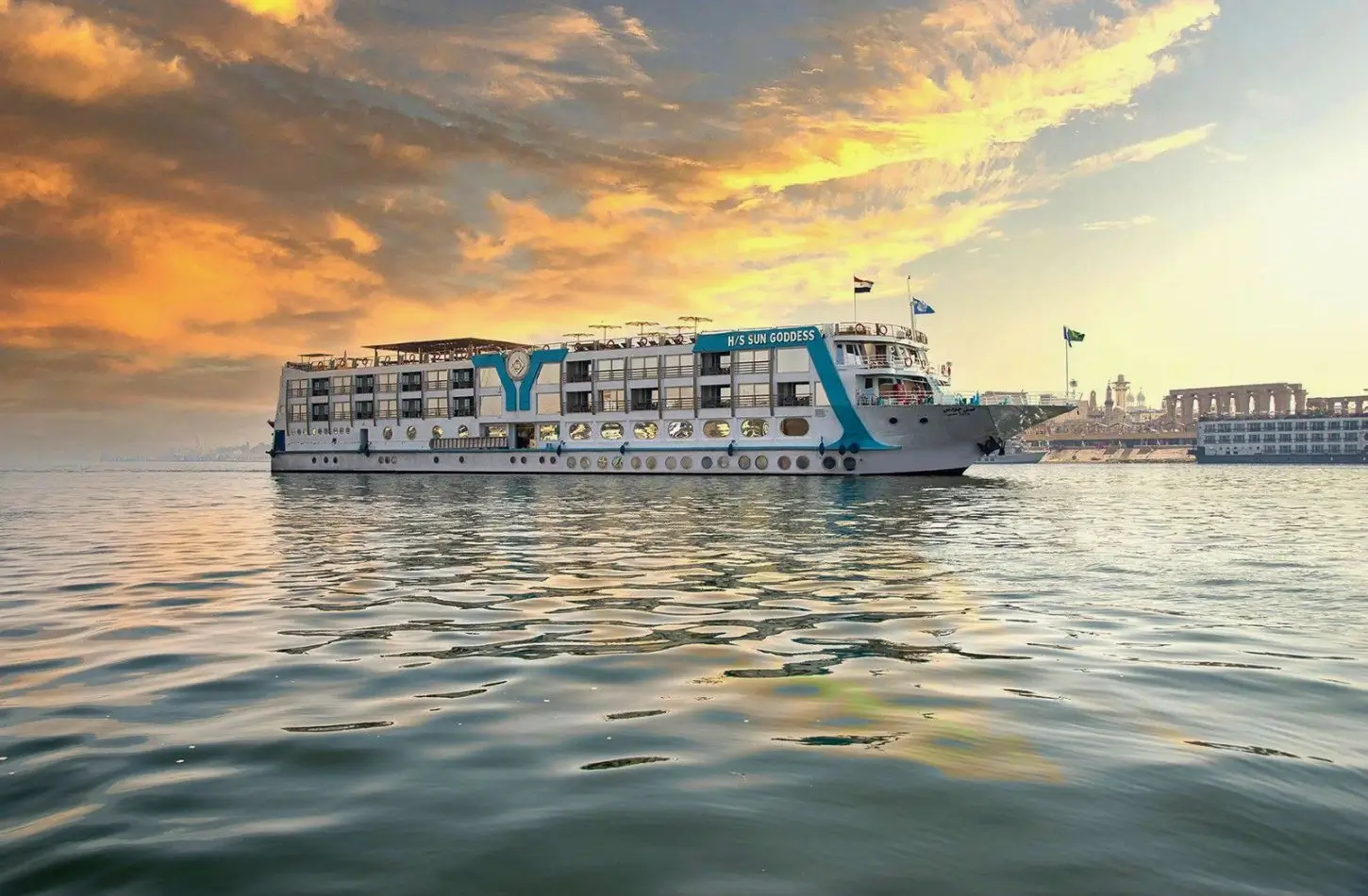
- Luxury Nile cruise: starting at $1,000 per person for 3-4 nights, all the way to $3,000+ per person for the premium cruises. Boats like the Historia Nile Cruise include suite-style accommodation, personal Egyptologist guides, à la carte gourmet dining, spa treatments, and personalized services to match boutique hotels while costing you only a fraction of what comparable luxuries would anywhere else in the world.
Low-season pricing: Peak season — October through April — is when prices are highest across all tiers, reflecting the surge in demand during the cooler months. If budget is your primary constraint, traveling between May and September yields meaningfully lower prices. The trade-off is the heat, which is significant in Upper Egypt during summer, but early morning excursions begin before the worst of it, and modern cruise ships are fully air-conditioned throughout.
What Does Independent Travel Actually Cost?
This is the comparison most cruise articles ignore. If you were to travel the same route between Luxor and Aswan independently—hotels in both cities, internal transport between them, hiring a tour guide daily, entrance tickets, and all meals—here’s a realistic breakdown of costs in 2026 for two people sharing a room:
| Item | Estimated Cost (per person) |
|---|---|
| 2 nights hotel in Luxor (mid-range) | $80–$120 |
| 2 nights hotel in Aswan (mid-range) | $80–$120 |
| Luxor–Aswan flight or train | $40–$80 |
| Private guide for 3–4 days | $120–$200 |
| Entry fees (Valley of Kings, Karnak, Edfu, Kom Ombo, Philae) | $80–$100 |
| All meals (3–4 days) | $60–$100 |
| Local transport/taxis | $30–$60 |
| Total estimate | $490–$780 per person |
the regular cruise level, it turns out that the all-inclusive option costs about the same as going independent, although with far fewer headaches, a guide provided for each attraction, and no idle time spent riding trains and waiting for cabs. On the deluxe cruise level, cruises are cheaper than booking a similar deal independently.
There is only one level at which going independent will beat a cruise: the luxury level. The best hotels in Luxor and Aswan, such as the Winter Palace and Sofitel Legend Old Cataract, cost nearly as much per night as a luxury cruise ship and offer greater independence. But they do not afford a view of the river.
Types of Nile Cruises: Standard, Deluxe, Luxury — and the Dahabiya
Most guides cover three tiers. There is a fourth option that very few articles mention — and it is the one that sophisticated repeat visitors increasingly choose.
Standard Nile Cruises
Standard Nile cruises feature clean vessels with en-suite cabins, a sun deck, a pool, and a buffet restaurant. All main temples will be visited during group excursions guided by licensed Egyptologists. These vessels usually accommodate between 80 and 120 guests. It is an experience entirely dedicated to sightseeing, and it accomplishes this quite successfully. Starting at $500 per person for a 3-4-day cruise.
For those who are looking to save money, travel solo, and are mostly interested in visiting as many monuments as possible on a budget.
Deluxe Nile Cruises
Deluxe Nile cruises provide superior accommodations, larger windows overlooking the river, improved dining services, more attentive staff, and fewer guests on excursions. Lounges and bars become a bit more luxurious, and there is generally a more relaxing atmosphere aboard. Starting from $700 per person for 3-4 days cruise.
For those: Couples, families, and anyone seeking a little extra luxury on board without paying luxury prices.
Luxury Nile Cruises
Nile cruise luxury boats offer a different kind of cruising altogether. Boats such as the Historia Nile Cruise provide you with suites with windows or balconies, à la carte meals, spa services, wellness centers, and Egyptologists who accompany only your party on your journey through Egypt. The number of passengers is low, at around 20-40, thus giving an intimate environment away from the hordes of tourists. Starting at $1,000 per person.
Recommended For: Romantic getaways, anniversaries, once-in-a-lifetime vacations, and travelers who enjoy their experience just as much as the destinations.
The Dahabiya: The Option That Nobody Thinks Of
A dahabiya is a traditional boat made of wood, larger than a felucca, with between 8 and 16 passengers, and which goes by sail if the weather permits and by motor otherwise. A totally different experience – fewer sights visited, but much more time spent at each of them, and an experience in which you actually feel surrounded by the Nile River.
They are more costly than motor cruise ships ($1,500–$3,000+ per person for a week), yet there is something no motor cruise ship offers, namely, total peace and space; the feeling of being on the Nile rather than seeing the Nile from a faraway place. Many people have traveled on either a motor cruise or a dahabiya, saying that a dahabiya trip was one of their greatest travel experiences.
If you can afford it and like slow travel, give it some thought, especially if you are traveling from Luxor to Aswan.
How Long Should Your Nile Cruise Last?
Three to four nights are the most popular Nile cruise lengths. The boat will either travel up or down the river, going from Luxor to Aswan or vice versa.
A week-long Nile cruise will give you the opportunity to go to Abu Simbel from Aswan. It consists of a pair of temples built by Ramses II, which were moved as part of the largest engineering accomplishment of the 20th century to save the temples from flooding caused by Lake Nasser. If your Egypt visit is a once-in-a-lifetime event, the few extra nights you spend seeing Abu Simbel will be worth each penny.
If you are visiting Egypt for the very first time and have only a limited time to spend there, the best formula is four nights cruising the Nile and two to three days visiting Cairo.
The Honest Pros and Cons of a Nile Cruise
No article that focuses solely on the positives will help you make a decision. Here’s an objective assessment of both sides.
The Pros
- Unpack only once. The most practical advantage of a Nile cruise is that your hotel is with you. No need to carry luggage between Luxor, Esna, Edfu, Kom Ombo, and Aswan. No need to check in and out at hotels. No need to arrange domestic flights. The ship takes care of everything while you sleep or relax on its sun-drenched deck, enjoying the sunset.
- Getting to Edfu and Kom Ombo becomes incredibly easy. These two temples—among the best-preserved in Egypt—are difficult to reach independently. Most road travelers overlook them because getting there and back requires a full day and a private driver. On a Nile cruise, they are simply the next stop.
- An Egyptologist guide changes everything. Without context, a temple seems like just an imposing ancient structure. But with an expert who explains the myths behind each inscription, the political purpose of the sculptures, and the historical moment each monument represents, it becomes a memory that stays with you long after you leave. This experience is built into every cruise – you don’t have to look for it or pay for it separately.
- The value in the mid-range travel category is truly exceptional. When you factor in accommodation, all meals, guided tours to five or six sites, entrance fees, and transportation, it’s difficult to replicate the experience of a luxury Nile cruise for $700 per person at the same price. Egypt offers some of the best value for money compared to any other tourist destination in the world, and Nile cruises top the list.
- The atmosphere is incomparable. Sailing down the Nile at sunrise, passing riverside villages and palm groves, and watching temples emerge from the desert morning after morning, is an experience that’s hard to describe without sounding like a marketing ploy. I’ve designed hundreds of tour packages to Egypt, and the most frequent refrain I hear from returning travelers is: “The Nile cruise was the highlight of the trip.”
The Cons — and I Mean This Honestly
- The itinerary is fixed, and it’s fast-paced. A standard four-night tour includes visits to five major sites in four days. In the Valley of the Kings alone, you could spend an entire day and not see everything you’d like. If you’re a slow traveler, a meticulous historian, or someone who needs quiet time at archaeological sites, the pace of the trip might feel overwhelming.
- Peak season crowds are a reality. Between October and April, multiple cruise ships dock at the same sites simultaneously. In Edfu, the dock area might be packed at 6:00 a.m. with five or six different groups of ships arriving at once. The temples themselves are large enough to accommodate the crowds, but if you’re envisioning a peaceful dawn among the hieroglyphs, you should adjust your expectations.
- The pressure from vendors at some stations is intense. In Edfu specifically, the path from the dock to the temple runs through a busy alleyway lined with horse-drawn carriage vendors and market stalls. Some travelers find this invigorating, while others find it exhausting. Knowing when you’re going on a cruise and preparing for it in advance is valuable advice that most cruise companies don’t offer.
- The meaning of a “five-star” rating varies greatly between ships. Cruise ship ratings in Egypt are largely subjective, and the experience of a budget ship marketed as five-star can be drastically different from that of a cruise ship like the Historia Nile Cruise or the Oberoi. So, always research the specific ship you’re booking—not just its star rating—and read recent passenger reviews on sites like TripAdvisor or Google.
- If you’re a fan of luxury and independence, cruises might not be for you. Travelers who prefer staying in the most luxurious hotels in each city, having complete freedom to choose their daily itinerary, and dining at local restaurants rather than ship buffets will find that luxury hotels in Luxor and Aswan—like the Winter Palace and the Old Cataract—offer a different kind of luxury. Cruises aren’t necessarily better just because they’re more convenient.
Is a Nile Cruise Safe?
Yes, a cruise on the Nile River is definitely safe. First of all, the tourist facilities located between Luxor and Aswan boast good infrastructure, security, and investments by the Egyptian authorities since their reopening after 2016. According to travel warnings provided by the UK Foreign Office, the US State Department, and the Australian Department of Foreign Affairs, the area between Luxor and Aswan falls under the category of ordinary precautions.
Apart from that, cruise ships are relatively new; they provide travelers with high standards of comfort and life-safety equipment that go beyond legal requirements. The personnel working on such ships have years of experience on this route of the Nile.
Practical safety tips: Drink plenty of water and use sunscreen, especially during the summer months when deck temperatures exceed 35°C. Drink bottled water instead of tap water throughout your trip. When stopping at markets like Edfu, be aware of your surroundings and ignore unsolicited offers of “free” gifts, which often precede sales attempts. Keep your valuables in your cabin safe, not in your everyday bags, while visiting temples.
Nada’s note: In five years of organizing tours to Egypt and personally sailing the Nile, not a single client has reported a serious safety incident on a Nile cruise. The risks are typical of traveling in a busy, warm tourist area, not structural hazards that threaten your safety.
Who Is a Nile Cruise Best For — and Who Should Skip It?
Best for:
- Historians and archaeology buffs. The sheer concentration of exceptional antiquities along this part of the Nile River is unrivaled elsewhere on planet Earth. Being able to rely on a professional Egyptologist guide at each archaeological site means you’ll learn more than you ever would alone. For those interested in what they’re seeing, there’s not much better than a cruise.
- First-time visitors to Egypt. With a Nile cruise, you’ll enjoy the luxury of traveling without worrying about any logistics. No need to arrange transportation, guides, meals, or accommodations; just concentrate on enjoying your vacation.
- Couples and honeymooners. The romantic setting provided by the amazing scenery, small ship ambiance, sunsets from the deck, and romantic allure of the Nile River make this one of the most popular honeymoon destinations in the world. Especially luxury-category cruises, which are ideal for a couple.
- Families with children. The rigid schedule and inclusive nature of a cruise take away the burden of organizing tours for a family – no need for planning meals or transportation. Kids will enjoy visiting ancient sites and seeing the temple and tomb; the boat serves as a safe home throughout the tour.
- Solo travelers. Touring in groups lets you be among people, and meeting other tourists is easy through shared meals and temple visits. For a single traveler, joining a group tour is one of the easiest ways to travel around Egypt with minimal effort.
- Older travelers who value convenience. The lack of need to move between hotels, easy access to cruises, and the high standard of facilities even at mid-range establishments make cruises particularly suitable for travelers who prioritize comfort over flexibility.
Perhaps consider not taking this tour if:
You would rather have flexible, open days to do whatever you please, without a rigid itinerary. – You prefer staying two or three days at one location, such as Karnak Temple or the Valley of the Kings, rather than moving on the following morning. – You are returning again to Upper Egypt after previous visits and thus wish to see more than the usual sites. – Your travels revolve around enjoying local eateries and street food.
If that applies to you, a land tour from Luxor/Aswan with day trips and an independent hired guide will suit your needs much better.
Nile Cruise vs. Independent Travel: The Real Comparison
Some travelers choose to stay in hotels in Luxor and Aswan and arrange day trips independently. It is a valid approach. Here is how it actually compares.
When it comes to the cost, at the medium level, the cruise will certainly win. All-inclusive pricing for the cruise is around $700 per person and cannot be beat, considering the cost of accommodation in two cities, transportation within Egypt, entry tickets, guiding services, and food.
When it comes to convenience, cruise wins big time. Traveling from Luxor to Aswan independently requires at least one internal flight ($40-$80 one-way) or a five-hour train ride. A cruise takes care of all this and does the traveling for you.
Depth of experience at the destination: The same if the independent trip includes hiring a private guide. It can be slightly better for cruises, since independent travel may not involve using guides at all.
In terms of flexibility, the independent tour option definitely has the upper hand. You have the freedom to stay at Karnak all day long, dine at the local Luxor restaurants, and reorganize your entire day according to your liking. A cruise ship would never do this for you.
Conclusion: In terms of a hassle-free vacation, the cruise option has an edge over the independent one in almost any respect. If you already know Egypt well, though, the independent tour option should not be overlooked.
Best Time for a Nile Cruise in 2026
The best months for a Nile cruise are from October to April. Temperatures along the Luxor-Aswan corridor are mild – from 20 to 28 degrees Celsius during the day – and conditions are ideal for outdoor excursions.
From December until February is the time when the weather is at its finest, when the cost of everything will be higher than normal, and the ships will be packed. Booking in advance is mandatory when you visit during those times, as ships sell out many months in advance.
The periods between October/November and March/April will provide the best balance among costs, weather, and the overall experience. During these months, there is warm weather, little competition, and prices are 15 to 25 percent lower than in peak seasons.
Temperatures rise in May until September: the temperature of Aswan climbs above 40°C throughout the months of June and July. Nonetheless, the cruise ships offer air conditioning, and all of the excursions start at 5 am before the extreme heat hits. The price during those months drops by about 30 to 40 percent compared to peak periods.
Frequently Asked Questions about Nile Cruises
Is a Nile cruise worth it for a short trip to Egypt?
If you have seven days or more, a four-night cruise with two or three days in Cairo is the ideal option. If your trip is less than five days, you might miss out on visiting Cairo and the Pyramids entirely, in which case a shorter stay in Luxor might be more suitable.
What is the difference between a standard and a luxury Nile cruise?
Both cruises cover the same route and temples; the difference lies entirely in the onboard services. A standard cruise offers comfortable cabins, buffet meals, and group excursions. A luxury cruise adds private suites, à la carte dining, an Egyptologist guide, and significantly fewer passengers.
What are the disadvantages of a Nile cruise?
The most prominent disadvantages include a fixed itinerary that limits time at each site, overcrowding at popular locations such as Edfu during peak season, and the subjectivity and unreliability of star ratings. Always look for specific ship information rather than relying solely on its star rating.
Is a Nile cruise better than staying in hotels in Luxor and Aswan?
For most first-time visitors, yes. A Nile cruise combines transportation, meals, a tour guide, and accommodation in one package, offering a unique perspective on Upper Egypt that land travel simply can’t match. Independent hotels are a better option for repeat visitors who want more flexibility and to experience local cuisine.
What is a dahabiya, and is it better than a regular Nile cruise?
A dahabiya is a traditional wooden sailing vessel that seats 8 to 16 passengers. It’s slower, quieter, and more intimate than motorized cruise ships. While more expensive (typically $1,500 to $3,000 or more per person for a week), it offers a completely different experience, ideal for repeat visitors or those who prefer to soak up the atmosphere rather than visit as many places as possible.
Final Note from Nada Safwat
Having spent five years creating itineraries for Egypt trips and cruising the Luxor-to-Aswan route from bottom-tier to luxury options, I will say that, while there are certainly other ways to spend your money that offer more value at the middle end of the range, a cruise on the Nile is one of the absolute best buys in terms of travel at the mid-range, and one of the most astounding experiences of travel possible anywhere at the high end.
Nothing quite compares to the ancient structures and tombs along this leg of the Nile. These sites — including the Valley of the Kings, Karnak, Edfu, Kom Ombo, and Philae — represent not only impressive ruins; they are evidence of a civilization that influenced human history, preserved in perfect condition for thousands of years in a desert climate. Sailing between them and listening to the stories brought to life by the carvings makes you see time differently.
Is a Nile cruise worth the money? For most of the people I work with, it is not even close. The question I am most often asked, after people return, is: “How do I go back and do it again?”
If you are ready to plan your trip, explore Tripianto’s Egypt Nile Cruises across all three tiers — or reach out directly, and I will help you find the right ship for your travel style, budget, and dates.
